How George Halamandres Built the Business Behind Famous Brands
How George Halamandres built the Steers business, how Famous Brands expanded, and how franchise, shareholder and management control differ today.
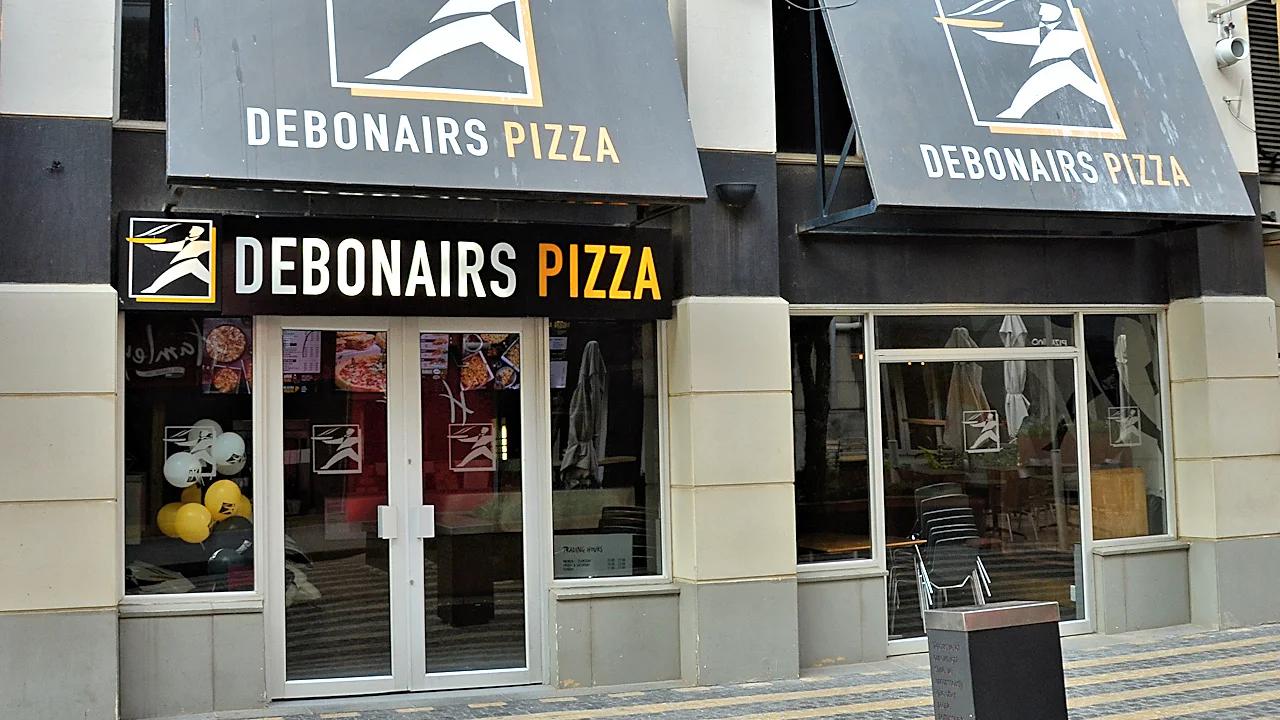
A family restaurant business became a listed group
George Halamandres developed the restaurant ventures that became the foundation of Famous Brands. [1][2]
The group grew from the Steers business into a portfolio of restaurant brands and an integrated supply chain. [1][4]
Famous Brands reported 15 brands and 3,043 restaurants at 28 February 2026. [4]
That network joins founder history, public ownership, brand control and thousands of local operating businesses. [1][4]
George Halamandres learned through the family trade
Halamandres was born in South Africa in 1911 to a family with roots on the Greek island of Lemnos. [8]
He entered the family café business after his father died in 1927. [8]
A later period in the United States exposed him to new restaurant formats and production methods. [2][8]
He brought those ideas into a South African market that still had few organised restaurant chains. [2][8]
Milky Lane came before the Steers name
Famous Brands records that Halamandres launched Milky Lane in 1958. [2]
The concept introduced soft-serve ice cream through a purpose-built restaurant format. [2][8]
Halamandres later sold that early venture, but the experience showed how a specialised format could scale. [8]
The brand history therefore started before the legal company and before the Steers chain. [2][1]
The Golden Spur supplied the restaurant foundation
The Golden Spur opened in Rosebank, Johannesburg, in 1961. [2]
It was the forerunner of the business that later used the Steers name. [2]
The early format combined steaks, sauces, service routines and a recognisable restaurant identity. [2][8]
Halamandres built the operating idea before the family created a listed holding company. [2][3]
Several names preceded the final Steers identity
The group history records a Seven Steer restaurant in Highlands North in 1963. [1]
The brand also used the names Branded Steer and Longhorn Steer before it became Steers. [2]
These names describe stages in one developing restaurant system. [1][2]
They should not be treated as unrelated companies founded by different people. [1][2]
The first franchise separated brand control from outlet ownership
Famous Brands dates the first franchised Steers restaurant to 1965. [1]
A franchise partner operates a local restaurant under the franchisor’s brand and business system. [1]
The partner can own the outlet business without owning the Steers trademarks or the listed parent. [1][4]
This separation remains central to the group’s scale and its ownership structure. [1][4]
The legal company came after the operating idea
The historical record says Steers Holdings was incorporated in 1969. [8]
A fast-food Steers restaurant opened in Jeppe, Johannesburg, in 1970. [8]
The legal company organised the family interests and the growing supply operation. [1][8]
The 1961 restaurant and the 1969 company therefore mark different layers of the same history. [2][8]
The family rebuilt the franchise programme in 1983
The family combined its Steers interests and relaunched the franchise programme in 1983. [1][2]
A Sandton City outlet attracted interest from prospective franchise partners. [2]
The programme gave local operators a repeatable restaurant format and central support. [1]
It also let the group expand without funding and managing every restaurant directly. [1][4]
Supply chain assets supported consistency
The business developed central manufacturing, logistics and product capabilities alongside its restaurant brands. [1][4]
These operations supplied franchise partners with standard products and supported common menu quality. [4]
The 2026 business model still combined brands, manufacturing, logistics and retail activities. [4]
Famous Brands is therefore more than a company that collects restaurant royalties. [4]
The 1994 listing changed the capital base
Steers Holdings listed on the Johannesburg Stock Exchange in November 1994. [1][3]
The 2025 group overview recorded an initial offer price of R1.65 and a R41 million market value. [3]
The listing introduced public shareholders while the founding families remained involved. [3]
Public ownership of the parent did not convert every franchised restaurant into a company-owned outlet. [1][4]
Debonairs added an acquired growth platform
Steers Holdings acquired the Debonairs Pizza brand in 1997. [1]
Debonairs had been founded in 1991 before it joined the group. [3]
The acquisition added pizza and delivery capabilities to a group built around Steers. [1][3]
It was a corporate brand acquisition, not a purchase of every future franchise outlet. [1][4]
Wimpy widened the restaurant portfolio
The first Wimpy restaurant in South Africa opened in Durban in 1967. [3]
Famous Brands acquired Wimpy South Africa in 2003. [1][3]
The transaction brought a casual dining brand into the group’s wider restaurant system. [3][4]
Famous Brands later acquired the Wimpy United Kingdom business in 2007. [1]
The Famous Brands name reflected a broader group
Steers Holdings changed its name to Famous Brands in 2004. [1]
The new name described a portfolio that had expanded beyond the original Steers identity. [1]
The company remained the listed parent while each restaurant brand retained its consumer identity. [1][4]
A parent company, a brand and a franchise outlet are separate records with different forms of control. [1][4]
The 2026 network was mostly a franchise system
Famous Brands reported a franchise network of 3,043 restaurants at 28 February 2026. [4]
The network covered South Africa, selected African markets, the Middle East and the United Kingdom. [4]
System-wide sales measure sales across restaurants in the network, including franchised outlets. [5]
That measure is different from the revenue recorded by the listed group. [4][5]
Issued shares and treasury shares need separate treatment
Famous Brands had 100,202,284 issued shares at 28 February 2026. [4]
Group subsidiaries held 933,459 of those shares as treasury shares. [4]
Treasury shares reduce the share count used for earnings calculations. [4]
They should not be treated as an outside shareholder position. [4]
Fund managers and beneficial holders are not the same
The 2026 shareholder table listed four fund managers with positions above 5% of issued shares. [4]
The largest disclosed fund-manager position was 16.05%. [4]
A separate beneficial ownership table listed a largest disclosed interest of 14.56%. [4]
A manager can administer shares for clients, while a beneficial holder has the underlying economic interest. [4]
The public spread did not show one sole controller
The company reported that public shareholders held 93.5% of issued shares at 28 February 2026. [4]
The beneficial ownership table did not identify one holder above 50%. [4]
The published register therefore did not show one sole beneficial controller. [4]
This conclusion concerns the listed parent and does not identify owners of individual restaurants. [4]
Darren Hele exercises management authority
Darren Hele joined Famous Brands in 2003 after executive roles at Wimpy and Whistle Stop. [6][7]
He became group chief executive on 1 March 2016. [7]
The interim results signed on 21 October 2026 still identified him as chief executive. [5]
His role carries management authority, but it does not make him the owner of each franchise outlet. [6][4]
Four forms of control sit inside the same system
George Halamandres supplied founder control during the original restaurant phase. [2][8]
Public shareholders now hold economic and voting interests in Famous Brands Limited. [4]
Franchise partners own and operate many local restaurant businesses under group agreements. [1][4]
Darren Hele and his executive team manage the listed group under board oversight. [6][5]
Frequently asked questions
Who founded the business behind Famous Brands? George Halamandres developed the restaurant ventures that became the group’s foundation. [1][2]
When did Steers Holdings list? It listed on the JSE in November 1994. [1][3]
Does Famous Brands own every restaurant? No. Its reported network includes franchise partners and company-owned formats. [1][4]
Who leads Famous Brands? Darren Hele was chief executive when the interim results were signed on 21 October 2026. [5]
Who owns Famous Brands? It is JSE-listed, and its 2026 beneficial ownership table did not show one holder above 50%. [4]
What is the difference between Steers and Famous Brands? Steers is a restaurant brand, while Famous Brands is the listed parent group. [1][4]
Sources
- Famous Brands, Our journey to today, 2024-02-29. Original source. Accessed 2026-11-11. ↩
- Famous Brands, Build compelling brands, 2024-02-29. Original source. Accessed 2026-11-11. ↩
- Famous Brands, Group overview, 2025-02-28. Original source. Accessed 2026-11-11. ↩
- Famous Brands, Consolidated and Company Financial Statements 2026, 2026-02-28. Original source. Accessed 2026-11-11. ↩
- Famous Brands, Interim results for the six months ended 31 August 2026, 2026-10-21. Original source. Accessed 2026-11-11. ↩
- Famous Brands, Board and management. Original source. Accessed 2026-11-11. ↩
- Famous Brands, Changes to the composition of the board, 2015-12-01. Original source. Accessed 2026-11-11. ↩
- BusinessTech, The man behind a R6.2 billion fast food empire in South Africa, 2024-10-05. Original source. Accessed 2026-11-11. ↩