How Massmart Was Built: Makro, Game and Walmart’s Full Takeover
How Mark Lamberti built Massmart from Makro, added Game, listed the group, and moved from public ownership to Walmart control and full private ownership.
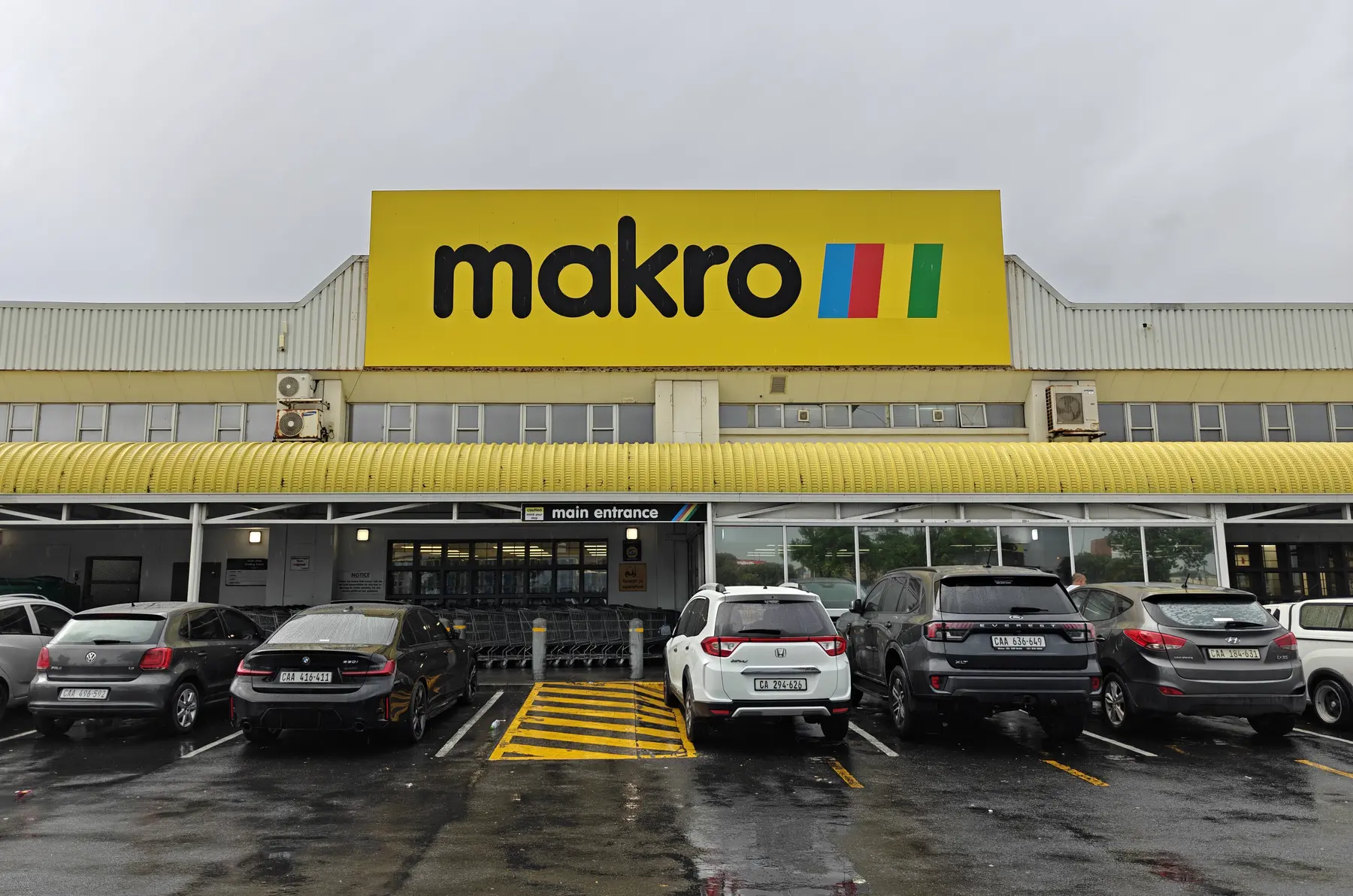
How was Massmart built?
Massmart grew from a six-store Makro base into a listed retail group through store expansion, acquisitions and a consistent low-cost operating model. [1]
Mark Lamberti led that development after becoming Makro managing director in 1988. Massmart’s annual report identifies Makro as the founding entity. [1][2]
The group bought Game in 1998 and listed on the JSE in 2000. Walmart acquired control in 2011. [1][4]
Walmart bought the remaining outside shares through a 2022 scheme. Massmart then left the JSE and became a wholly owned group business. [7][8]
1990 or 1992: why the founding date differs
Massmart’s 2008 annual report places the group’s founding in 1990. Its timeline also labels Makro as the founding entity with six stores. [1]
Lamberti’s own history gives a different date. It says he founded Massmart in 1992 after becoming Makro managing director in August 1988. [2]
The records can describe different stages of the same corporate build. One marks the group timeline, while the other marks Lamberti’s expansion vehicle. [1][2]
This article uses 1990 for Massmart’s corporate history. It keeps the 1992 account visible because the two dated sources do not fully agree. [1][2]
Makro supplied the founding platform
Massmart did not begin as an empty holding company with no trading base. Makro supplied six operating warehouse stores at the start. [1]
The format combined food, liquor and general merchandise for retail and wholesale customers. Large sites supported a high-volume, low-margin model. [1]
The annual report describes a no-frills warehouse approach that kept costs down. Makro’s store card also produced useful customer purchasing data. [1]
Makro therefore contributed more than a brand name. It supplied stores, customers, systems and an operating formula for later group expansion. [1]
Mark Lamberti’s company-builder role
Lamberti joined Makro as managing director in August 1988. His own account describes him as Massmart’s founder, architect and long-serving chief executive. [2]
He pursued growth through new stores and acquisitions. That approach joined established retail formats inside one group instead of creating every chain internally. [2][1]
Lamberti became non-executive chairman on 1 July 2007 after almost 19 years in executive leadership. He resigned from that position in April 2014. [2]
His roles concern founding and management. They do not establish any current equity interest, voting right or operating control in Massmart. [2][8]
Game changed the scale and customer mix
Massmart acquired 26 Game stores on 1 July 1998. The annual report records the date and store count in its corporate timeline. [1]
Game sold general merchandise and non-perishable groceries through a discount retail format. That proposition differed from Makro’s combined retail and wholesale base. [1]
The acquisition therefore expanded both scale and format coverage. Massmart could serve household shoppers while Makro retained large wholesale and commercial demand. [1]
Game remains a Massmart brand in 2026. The current group site describes it as a discount retailer operating across sub-Saharan Africa. [3]
The JSE listing changed the capital structure
Massmart listed on the JSE on 4 July 2000. The listing followed a decade of growth from the original Makro platform. [1]
A listing creates publicly traded shares, reporting duties and a wider shareholder base. It does not remove management authority from directors and executives. [1]
Lamberti remained the company builder and chief executive during this period. Public shareholders held equity, while management continued to run group operations. [2]
These are separate relationships. Equity records economic ownership, votes influence governance, and executives exercise delegated management authority. [1][2]
The main corporate relationships
The four records below show how a founder, two trading formats and an international parent fit into the same history. [1][4][8]
| Entity | Role in the history | Key date | Control position | Sources |
|---|---|---|---|---|
| Massmart | South African retail and wholesale group | Corporate timeline starts in 1990 | Wholly owned within Walmart after the 2022 scheme | [1] [8] |
| Makro South Africa | Six-store founding entity and warehouse format | Founding base in 1990 | Massmart trading brand | [1] [3] |
| Game | Discount retail format acquired by Massmart | 26 stores acquired on 1 July 1998 | Massmart trading brand | [1] [3] |
| Walmart | International parent company | Acquired 51% in 2011 | Full ownership after the 2022 scheme | [4] [7] [8] |
2011: Walmart bought a controlling interest
Walmart’s corporate history says it acquired 51% of Massmart in 2011. That purchase gave Walmart majority equity and corporate control. [4]
The Competition Tribunal approved the large merger subject to conditions on 31 May 2011. Its record names Walmart as acquirer and Massmart as target. [5]
A 51% interest was controlling, but it was not complete ownership. Other shareholders retained the remaining equity and related voting interests. [4][5]
Massmart also remained listed after the transaction. Its public-market status and Walmart’s majority control therefore existed at the same time. [4][7]
The merger conditions mattered
The Tribunal approved the transaction subject to public-interest conditions. Employment, collective bargaining and supplier development formed part of the review. [5][6]
Government departments and trade unions challenged parts of the approval. The Competition Appeal Court gave its decision on 9 March 2012. [6]
The court required a study on support for local suppliers. It also required reinstatement steps for 503 previously retrenched employees. [6]
These conditions regulated consequences of the merger. They did not reduce Walmart’s 51% equity stake to a non-controlling investment. [4][6]
The majority phase lasted for more than a decade
From 2011, Walmart controlled Massmart without owning every share. Minority shareholders still had an economic interest in the listed South African company. [4][7]
This structure separated control from complete ownership. Walmart could direct the group while outside investors continued to hold quoted Massmart shares. [4][7]
Massmart kept its local brands and management structure during this period. Parent control did not make every operating decision a shareholder vote. [3][7]
The distinction is central to the history. Majority ownership arrived in 2011, while full ownership followed through a separate transaction in 2022. [4][8]
2022: Walmart proposed the final buyout
On 29 August 2022, Walmart announced a potential offer for Massmart shares it did not already own. The proposed price was R62 per share. [7]
The offer represented a 53% premium to the closing price on 26 August 2022. It also carried a 62% premium to the 90-day average. [7]
The proposal used a scheme of arrangement, with a general offer as a fallback. The structure required further company and shareholder procedures. [7][8]
An announcement of terms was not completion. Full ownership depended on approvals, conditions and the later implementation of the scheme. [7][8]
The scheme ended the public listing
Massmart shareholders approved the scheme resolution at a meeting on 21 October 2022. Remaining conditions were then fulfilled or waived. [8]
The scheme became unconditional on 4 November 2022. Walmart would acquire all scheme shares on the implementation date. [8]
The timetable set 21 November for implementation and 22 November for termination of the JSE listing. The general offer was not implemented. [8]
This transaction ended outside public share ownership in Massmart. It also removed the listed market through which those shares had traded. [8]
Equity, voting rights and management are not synonyms
Walmart’s 2011 purchase delivered majority equity and control. Minority investors remained until the 2022 scheme removed their outside shareholdings. [4][8]
Voting rights usually follow shares, subject to company rules. Management authority instead comes from board appointments, employment and delegated operational responsibility. [8]
Lamberti’s founder and executive roles describe leadership during Massmart’s build. They are not evidence of current voting or management control. [2][8]
Likewise, the Makro and Game brands are operating formats. They do not hold the parent company merely because customers know their names. [3][8]
What Massmart operates in 2026
Massmart’s website described the group as operating 293 stores in eight sub-Saharan countries when accessed on 23 October 2026. [3]
It lists Makro, Game, Builders, Walmart, Jumbo and Shield among its current formats. This article profiles the brands central to the founding path. [3]
Makro remains a multi-category big-box format for retail, commercial and wholesale customers. Game remains a discount retailer across several product categories. [3]
Current store counts and formats can change. The dated website figure should not be read as a permanent number or a historical founding measure. [3]
What the Massmart story shows
Massmart’s history combines internal expansion with acquired formats. Makro supplied the starting platform, while Game widened the consumer retail reach. [1]
The JSE listing broadened public ownership. Walmart’s 2011 transaction then introduced majority control without immediately ending outside ownership. [1][4]
The 2022 scheme completed a different step. It converted majority control into full ownership and ended Massmart’s quoted-company period. [8]
Separating those stages makes the record clearer. Founding, management, equity ownership, voting control and brand operations are related but distinct facts. [1][8]
Frequently asked questions
Who founded Massmart? Company records identify Mark Lamberti as the founder and architect, while the group timeline starts from Makro in 1990. [1][2]
When did Massmart buy Game? Its 2008 annual report records the acquisition of 26 Game stores on 1 July 1998. [1]
When did Walmart take control? Walmart acquired 51% in 2011 after the Competition Tribunal approved the merger subject to conditions. [4][5]
When did Walmart obtain full ownership? The scheme became unconditional in November 2022, and the JSE listing ended on 22 November. [8]
Sources
- Massmart Holdings, Annual Report 2008, 2008-10-01. Original source. Accessed 2026-10-23. ↩
- Mark Lamberti, About Mark Lamberti. Original source. Accessed 2026-10-23. ↩
- Massmart, Company news and information. Original source. Accessed 2026-10-23. ↩
- Walmart, Walmart history. Original source. Accessed 2026-10-23. ↩
- Competition Tribunal of South Africa, Wal-Mart Stores Inc and Massmart Holdings Limited, 2011-05-31. Original source. Accessed 2026-10-23. ↩
- Government of South Africa, Competition Appeal Court decision in the Walmart and Massmart merger case, 2012-03-09. Original source. Accessed 2026-10-23. ↩
- Walmart, Reviewed Massmart interim results and business update, 2022-08-29. Original source. Accessed 2026-10-23. ↩
- Massmart and Walmart, Finalisation announcement for the scheme of arrangement, 2022-11-04. Original source. Accessed 2026-10-23. ↩