How MTN Was Built: M-Cell, Phuthuma Nhleko and Nigeria
How M-Cell became MTN Group, how Nigeria and Investcom changed its scale, and how dated ownership, voting rights and management differ today.
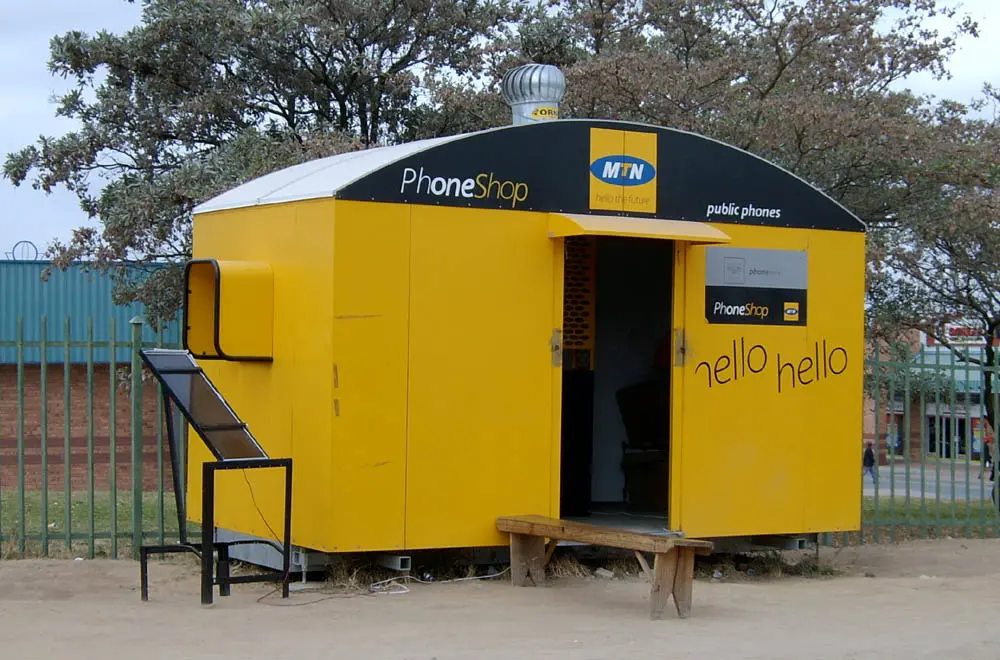
How did MTN begin?
MTN began as a licensed South African mobile network before it became a large listed group. The network and its parent had different names. [1][4]
South Africa awarded the GSM licence in September 1993. The operating team started building the network in January 1994. [4]
Commercial service began on 1 June 1994. The date matches Vodacom’s national launch date, but the companies had separate ownership. [4][1]
MTN’s origin was therefore a corporate and regulatory project. No reviewed primary source identifies one private individual as its sole founder. [1]
M-Cell and MTN were not the same operating layer
M-Cell Limited was incorporated in 1994. It became the listed holding company above investments in the mobile network and service provider. [1]
The network licence sat in Mobile Telephone Networks Proprietary Limited. MTN’s 2003 report called this company the network operator. [1]
M-Cell initially held 25% of MTN Holdings and 60% of the service provider M-Tel. It increased those interests through later transactions. [1]
This structure matters. A shareholder in M-Cell owned listed holding-company equity, not a direct personal interest in every mobile licence. [1]
The listed company assembled full ownership
M-Cell became a public company in 1995. Its investments then included the 25% MTN Holdings interest and the M-Tel stake. [1]
In 1999, M-Cell increased its MTN Holdings interest to as much as 72%. It also acquired satellite distributor Orbicom. [1]
M-Cell acquired the remaining MTN Holdings shares in 2000. The transaction included a 23% interest bought from Transnet’s Transtel division. [1]
By then the listed parent owned MTN Holdings outright. The operating network still remained a separate subsidiary below that company. [1]
Prepaid service widened the addressable market
MTN South Africa introduced its prepaid platform in 1996. Customers could obtain service without a long contract or conventional credit check. [1][4]
MTN also introduced SMS during that period. These services changed how customers could enter and use the mobile market. [4]
The commercial model supported wider adoption. It was different from the corporate transactions occurring in the listed parent. [1][4]
Network growth, product design and shareholder ownership were connected, but they were not the same activity. [1]
International expansion started before Phuthuma Nhleko became chief executive
MTN began its international expansion in 1997. It obtained interests or licences in Uganda, Rwanda and Swaziland during 1997 and 1998. [1][4]
MTN International was created in February 1998 to organise the foreign expansion. [4]
The group acquired a Cameroon licence in 2000. These steps occurred before Phuthuma Nhleko became group chief executive in July 2002. [1][2]
Nhleko became the defining builder of the next phase. He should not be mislabelled as the founder of every earlier MTN operation. [1][3]
Nigeria changed the group’s centre of gravity
MTN paid US$285 million for Nigerian GSM licences in 2001. MTN Nigeria launched commercial operations on 8 August that year. [1]
The company passed one million Nigerian subscribers by March 2003. Its effective group interest was 79.5% at that reporting date. [1]
Nigeria combined a large population with very low telephone penetration. Building the network required significant capital and local operating capability. [1]
The licence and launch came before Nhleko became chief executive. His later leadership covered the rapid scaling of this platform. [1][2]
Phuthuma Nhleko led the main expansion phase
Nhleko served as MTN chairman from July 2001 before becoming group chief executive on 1 July 2002. [2][3]
He inherited a group with South African operations and a growing African portfolio. Nigeria had already launched, but remained in an early build phase. [1]
During his tenure, MTN expanded its regional footprint, capital base and management systems. The group also completed its largest historical acquisition. [2][3]
MTN’s 2010 report credited him with building management teams and taking calculated expansion risks. He left the chief executive role in April 2011. [3]
M-Cell became MTN Group in 2002
The listed parent changed its name from M-Cell Limited to MTN Group Limited in 2002. [1]
The company said the change reinforced its African presence and aligned the corporate identity with the MTN brand. [1]
The name change did not create a new operating network. It renamed the listed legal entity that had assembled the MTN interests. [1][7]
The current company retains the 1994 registration number. This continuity is why M-Cell does not need a duplicate organisation record. [7][1]
Johnnic’s unbundling changed the shareholder base
Johnnic Holdings held a significant interest during the early listed period. Its stake reflected shareholder capital, not daily network management. [1]
Johnnic unbundled a 31.9% MTN Group interest to its shareholders in 2003. [1]
After that transaction, MTN reported Newshelf 664 at 18.7% and the National Empowerment Consortium at an estimated 8.8%. [1]
The remaining 72.5% was free float held by institutional and retail investors. These figures describe that historical moment only. [1]
Investcom doubled the operating footprint
MTN offered to acquire all of Investcom in May 2006. The Dubai and London-listed company operated networks across Africa and the Middle East. [2]
Shareholders approved the US$5.5 billion cash-and-shares transaction on 28 June 2006. It became wholly unconditional on 4 July. [2]
MTN paid US$3.7 billion in cash and issued about 183 million shares to former Investcom shareholders. [2]
The acquisition expanded MTN’s presence from 11 countries to 21. Investcom was delisted in August 2006 and integrated into MTN. [2][4]
The main MTN corporate relationships
The records below separate the listed parent, holding company, operating networks and historical transaction parties. [1][5]
| Entity | Corporate role | Key date | Ownership or control point | Sources |
|---|---|---|---|---|
| MTN Group | JSE-listed parent, formerly M-Cell | Renamed in 2002 | Distributed listed ownership at 31 December 2025 | [1] [6] |
| MTN Holdings | Intermediate holding and debt-issuing company | Wholly acquired in 2000 | Controlled within MTN Group | [1] [6] |
| MTN South Africa | South African operating business | Launched 1 June 1994 | 100% effective group interest in 2025 | [4] [5] |
| MTN Nigeria | Nigerian listed operating company | Launched 8 August 2001 | 76.3% effective group interest in 2025 | [1] [5] |
| Investcom | Acquired regional operator | Acquired in July 2006 | Integrated after MTN bought 100% | [2] |
| Johnnic Holdings | Historical listed shareholder | Unbundled 31.9% in 2003 | Shareholder influence did not equal management office | [1] |
MTN Nigeria has its own listed-company history
MTN Nigeria Communications was incorporated on 8 November 2000. It received its national licence in February 2001. [10]
The company became a public company in April 2019. It listed by introduction on the Nigerian Exchange on 16 May 2019. [10]
MTN International Mauritius held 73.39% of MTN Nigeria at 31 December 2025. This was the disclosed direct substantial interest. [10]
MTN Group reported a 76.3% effective interest. The direct registered holding and wider effective group interest describe different measures. [5][10]
Current MTN Group ownership is distributed
MTN Group’s 2025 statements identified two beneficial shareholders above 5%. [6]
The Government Employees Pension Fund held 19.94% at 31 December 2025. M1 Limited held 5.94%. [6]
These figures measure beneficial equity at that reporting date. They do not make either investor the company’s executive manager. [6][7]
Every ordinary share carried one vote for the May 2026 annual meeting. Voting power therefore followed the number of ordinary shares held. [7]
The board and executives manage the group
Ralph Mupita became group president and chief executive in September 2020. He had joined MTN as group chief financial officer in 2017. [9]
Mcebisi Jonas served as group chairman in the 2025 reporting suite. The chair and chief executive were separate offices. [5]
Mupita’s authority came from his executive office and board appointment. It did not depend on personal majority ownership. [9][7]
Shareholders elect directors and vote on reserved matters. Executives manage operations under the board’s oversight. [7]
Where Phuthuma Nhleko works now
Nhleko trained as a civil engineer and later completed an MBA. His career then moved through engineering, finance, investment and telecommunications. [12]
Nhleko returned as MTN’s non-executive chairman from 2013 to 2019. He no longer holds an MTN management office. [11]
At 27 October 2026, the JSE identified him as its independent non-executive chairman. It appointed him chairman in May 2022. [14]
Phembani identified Nhleko as its chairman and co-founder. This is a separate private investment-company role. [13]
These positions are current roles, not evidence that he controls MTN equity or management today. [6][9]
The group reached 317.7 million customers in 2026
MTN reported 317.7 million customers across 19 markets at 30 June 2026. Active data users reached 179.3 million. [8]
First-half service revenue was R115.3 billion on a reported basis. MTN invested R19.7 billion in capital expenditure excluding leases. [8]
MTN South Africa served 39.5 million subscribers after management actions reduced parts of the prepaid base. [8]
These are dated group measures. They should not be used as historical figures for the 1994 network or 2001 Nigerian launch. [8][1]
What the MTN history shows
MTN’s development involved licence awards, operating execution, listed-company transactions and acquisitions. No single label explains every stage. [1][2]
M-Cell assembled the holdings and became MTN Group. The South African network remained a distinct operating company. [1]
Nigeria created a major growth platform. Nhleko led its scaling period, while the licence and launch preceded his chief executive appointment. [1][3]
Investcom widened the footprint again. Ralph Mupita now manages a distributed-shareholder group under board oversight. [2][9][6]
Frequently asked questions
Who founded MTN? The reviewed records describe a corporate licence and management build. They do not name one sole private founder. [1][4]
Was M-Cell a different company? M-Cell was the former name of today’s listed MTN Group legal entity. [1][7]
Did Phuthuma Nhleko launch MTN Nigeria? No. Nigeria launched in August 2001. Nhleko became group chief executive in July 2002. [1][2]
Who owns MTN? MTN has distributed listed ownership. GEPF held 19.94% and M1 Limited held 5.94% at 31 December 2025. [6]
Who runs MTN? Ralph Mupita served as group president and chief executive at the review date. [9]
Sources
- MTN Group, Sustainability Report 2003, 2003-03-31. Original source. Accessed 2026-10-27. ↩
- MTN Group, Integrated business report for the year ended 31 December 2006, 2006-12-31. Original source. Accessed 2026-10-27. ↩
- MTN Group, Integrated business report 2010, 2010-12-31. Original source. Accessed 2026-10-27. ↩
- MTN Group, Who we are and where we come from: 30 years of value creation, 2024-06-01. Original source. Accessed 2026-10-27. ↩
- MTN Group, Integrated Report for the year ended 31 December 2025, 2026-04-29. Original source. Accessed 2026-10-27. ↩
- MTN Group, Annual Financial Statements for the year ended 31 December 2025, 2026-03-13. Original source. Accessed 2026-10-27. ↩
- MTN Group, Notice of the 31st Annual General Meeting, 2026-04-28. Original source. Accessed 2026-10-27. ↩
- MTN Group, H1 2026 results: record margin, earnings, cash flow and returns, 2026-08-24. Original source. Accessed 2026-10-27. ↩
- MTN Group, Ralph Mupita: Group President and Chief Executive Officer. Original source. Accessed 2026-10-27. ↩
- Nigerian Exchange, MTN Nigeria audited financial statements for 2025, 2026-02-26. Original source. Accessed 2026-10-27. ↩
- IHS Towers, Phuthuma Nhleko: Independent Non-Executive Director. Original source. Accessed 2026-10-27. ↩
- Nelson Mandela University, Honorary doctoral recipient: Phuthuma Freedom Nhleko, 2020-04-01. Original source. Accessed 2026-10-27. ↩
- Phembani Group, Meet the team: Phuthuma Nhleko. Original source. Accessed 2026-10-27. ↩
- JSE Limited, JSE board, leadership and executive team. Original source. Accessed 2026-10-27. ↩