How Pepkor Was Built: PEP, Steinhoff and the 2017 Listing
How PEP became the core of Pepkor, how Steinhoff and the 2017 listing changed its ownership, and who owns and manages the group in South Africa today.
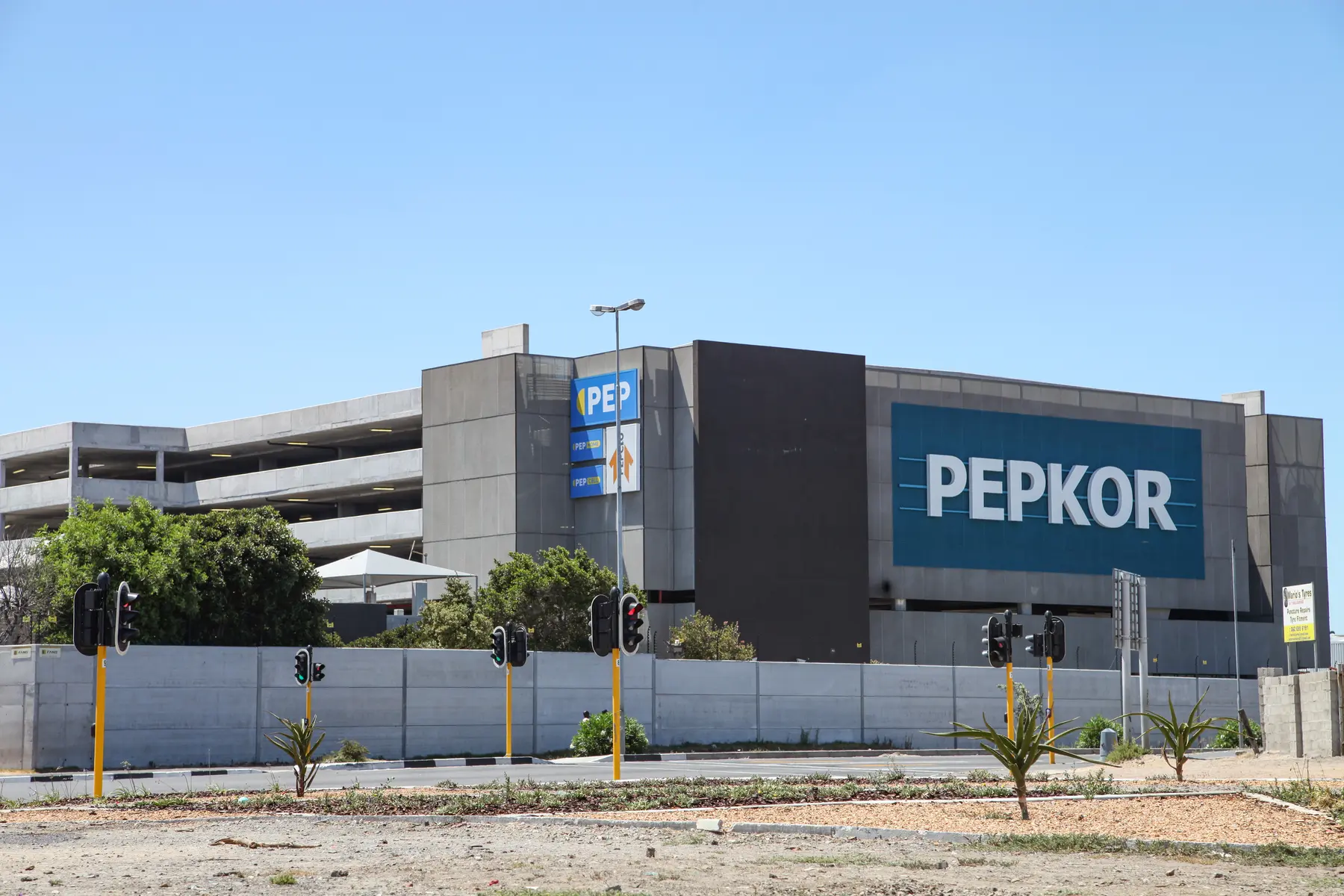
PEP and Pepkor are related, but not interchangeable
PEP is the retail brand that began the modern Pepkor story. Pepkor Holdings is the listed parent that now contains many brands. [1][4]
The distinction matters because brand history, legal-company history and listed-share ownership have different starting dates. [1][5]
PEP began trading in 1965. The present listed Pepkor Holdings entity was incorporated in 2017 before the Johannesburg listing. [1][4]
A person shopping at PEP therefore deals with an operating brand, not directly with the JSE security called Pepkor Holdings. [7][4]
Renier van Rooyen opened the first PEP store
Pepkor identifies Renier van Rooyen as the person who opened the first PEP store in De Aar during 1965. [1]
The stated aim was to offer needed products at low prices while treating customers with dignity and respect. [1]
That operating idea joined price leadership with a clear view of the customer. It became more durable than any later ownership arrangement. [1]
Van Rooyen died in Cape Town in November 2018 at the age of 86, after a long retail career. [12]
The first store created a repeatable discount model
PEP’s model depended on keeping the cost of trading low and passing those savings to customers through lower prices. [1][7]
Price benchmarking, operational efficiency and convenient stores remain part of PEP’s stated approach today. [7]
The model was not only a marketing claim. It required buying discipline, distribution systems, store execution and a consistent internal culture. [1][7]
Those capabilities helped PEP expand from a single Northern Cape store into a national retail network. [1][7]
PEP became the base of a wider group
The original retail operation eventually sat inside Pepkor Proprietary Limited, a company registered in 1965. [1][4]
Pepkor Holdings reported Pepkor Proprietary Limited as a wholly owned significant subsidiary at 30 September 2025. [4]
This subsidiary differs from Pepkor Holdings Limited, which has another registration number and a 2017 corporate origin. [1][4]
The listed parent owns the group structure. The operating subsidiary and retail brands conduct much of the underlying trade. [4]
Ackermans brought a separate older history
Ackermans began in Wynberg, Cape Town, in 1916. Its history predates PEP by almost five decades. [9][1]
The current group therefore contains businesses that did not start with Renier van Rooyen or the 1965 PEP opening. [1][2]
Ackermans describes its purpose as making quality products affordable to families. Pepkor places it within clothing and general merchandise. [9][8]
A group timeline must preserve these separate origins instead of assigning every brand the founding date of its current parent. [1][2]
The group assembled multiple retail lineages
Pepkor’s published timeline also records Bradlows from 1901, Russells from 1950 and several later retail brands. [1][2]
These dates describe the first trading histories of brands now inside the group. They do not mark Pepkor Holdings incorporation dates. [1][4]
The group now combines clothing, household goods, electronics, financial services and related retail platforms. [4]
Acquisition and internal reorganisation connected these operations without erasing the brands’ separate founders and histories. [10][1]
Steinhoff acquired Pepkor in 2015
Pepkor’s 2018 report records that Steinhoff acquired Pepkor in 2015. The transaction changed the shareholder above the operating businesses. [1]
It did not restart PEP’s 1965 trading history or turn Steinhoff into the founder of the retail brand. [1]
The acquisition also created significant goodwill and intangible assets in later Pepkor financial statements. [1]
Steinhoff ownership later shaped the form of Pepkor’s listing and the risks around its shareholder structure. [10][3]
Steinhoff assembled African retail assets for a listing
In 2017, Steinhoff placed its African retail assets into a new holding company called Steinhoff Africa Retail Limited. [5][10]
The assets included the Pepkor African operations, JD Group brands, Tekkie Town, SteinBuild and other businesses. [5][10]
The new company used the abbreviation STAR. It became the single listed holding company for the assembled African retail group. [5][10]
This was a corporate reorganisation under common control, not the creation of a new PEP operating business. [5][3]
STAR listed on the JSE in September 2017
STAR listed on the JSE main board on 20 September 2017 under the share code SRR. [5][10]
The listing issued 750 million shares at R20.50 and raised R15.2 billion after costs. [10]
Steinhoff indirectly held 76.8% of the issued STAR shares at 30 September 2017. [10]
Public investors could own listed STAR equity, while Steinhoff retained a clear controlling shareholder position. [10]
The main Pepkor corporate layers
The records below separate the retail brands, operating subsidiary, listed parent and historical shareholder. [1][4]
| Entity | Role | Key date | Ownership or control point | Sources |
|---|---|---|---|---|
| Pepkor Holdings | JSE-listed parent, formerly STAR | Listed 20 September 2017 | Distributed ownership at 30 September 2025 | [10] [4] |
| PEP | Discount retail brand | First store in 1965 | Operates within the Pepkor group | [1] [7] |
| Ackermans | Value retail brand | First store in 1916 | Separate brand history within Pepkor | [9] [8] |
| Steinhoff International | Historical controlling shareholder | Acquired Pepkor in 2015 | Successor Ibex held no Pepkor shares by 30 September 2025 | [1] [4] |
The Steinhoff crisis exposed the ownership connection
Steinhoff’s 2017 crisis affected Pepkor because Steinhoff was the listed retailer’s controlling shareholder. [10][1]
Pepkor’s businesses remained separate legal and management units, but the shareholder relationship still created financial and reputational risk. [1]
A parent-company crisis can affect a subsidiary even when the subsidiary continues selling goods and managing stores. [1]
Pepkor’s later disclosures tracked operating performance and steps to reduce dependence on the former controlling shareholder. [1][3]
STAR restored the Pepkor name in 2018
Shareholders approved changing the company name from Steinhoff Africa Retail Limited to Pepkor Holdings Limited in 2018. [11]
Trading under the Pepkor name and the PPH share code began on 15 August 2018. [11]
The name change did not create a new listed legal entity. The company kept registration number 2017/221869/06. [11][4]
It restored the Pepkor identity while preserving the continuity of the 2017 STAR listing company. [11][1]
Steinhoff later became Ibex and lost control
Pepkor’s 2023 statements identify Ibex Group as the former Steinhoff International Holdings group. [3]
Ibex reduced its Pepkor holding to 43.89% on 8 February 2023. Pepkor then stopped treating Ibex as its ultimate holding company. [3]
A large minority interest can still carry influence, but 43.89% did not give Ibex the disclosed status of ultimate controller. [3]
This change separated being the largest shareholder, controlling the company and managing daily operations. [3][6]
Ibex exited Pepkor completely in July 2025
Ainsley Holdings and SAHPL disposed of their entire beneficial interests in Pepkor on 22 July 2025. [4]
Both companies were indirect subsidiaries of Ibex Group when the disposal occurred. [4]
Pepkor reported that Ibex held no issued ordinary shares at 30 September 2025, compared with 30.18% one year earlier. [4]
The exit ended the former Steinhoff group’s disclosed equity ownership, not PEP’s connection to the Pepkor operating group. [4]
Current Pepkor ownership is distributed
Public shareholders held 98.24% of Pepkor’s ordinary shares at 30 September 2025. [4]
The Public Investment Corporation was the largest disclosed beneficial shareholder at 19.91%. [4]
Titan Premier Investments held 3.81% and the Government of Norway held 2.97% on the same beneficial-owner schedule. [4]
These are dated beneficial equity positions. They differ from the separate fund-manager schedule in the same report. [4]
Voting rights follow ordinary shares
Pepkor’s 2025 statements say each ordinary share entitles its holder to one vote at company meetings. [4]
The 19.91% PIC figure is beneficial ownership, while the report separately listed a 15.07% PIC fund-manager position. [4]
Fund management can involve investments held for clients. It is not automatically the manager’s own beneficial equity. [4]
Voting influence must be read with the shareholder register, beneficial ownership and mandate structure at a stated date. [4]
Pieter Erasmus leads management
Pieter Erasmus became Pepkor Holdings chief executive on 1 October 2022. [6]
He joined PEP as financial director in 1998 and became group managing director of Pepkor Limited in 2001. [6]
He held that managing director role for sixteen years before resigning in 2017. [6]
His executive authority now comes from the board appointment, not from a disclosed controlling personal shareholding. [6][4]
The board separates oversight from executive management
Pepkor’s 2025 statements identify Wendy Luhabe as independent chair and Pieter Erasmus as chief executive. [4]
Riaan Hanekom served as chief financial officer. The chair and both executive offices were separately identified. [4]
Shareholders use voting rights on reserved matters and director appointments. Executives manage operations under board oversight. [4]
This structure means the largest investor, board chair and chief executive can be three different parties. [4][6]
Pepkor operates at national retail scale
Pepkor reported 6,158 stores across its retail footprint at 30 September 2025. [4]
Its current platform includes clothing, general merchandise, household goods, electronics and financial services. [4]
PEP remains the group’s largest single-brand retailer in South Africa, according to Pepkor’s current brand page. [7]
Ackermans remains a distinct value retailer with its own store network, customer focus and brand culture. [8][9]
What the Pepkor history shows
Renier van Rooyen founded PEP as an operating retail business in 1965. He did not found the 2017 listed legal entity. [1][5]
Steinhoff acquired the group and later listed the African assets as STAR. That changed ownership, not the original founding date. [1][10]
STAR became Pepkor Holdings in 2018. Ibex later lost control and exited the equity entirely during 2025. [11][3][4]
Pieter Erasmus now leads a distributed-shareholder group whose ordinary shares each carry one vote. [6][4]
Frequently asked questions
Who founded PEP? Renier van Rooyen opened the first PEP store in De Aar in 1965. [1]
Is PEP the same company as Pepkor Holdings? No. PEP is a retail brand within the Pepkor group. [7][4]
When did Pepkor list? The present listed company entered the JSE as STAR on 20 September 2017. [5][10]
Does Steinhoff still own Pepkor? No. Its successor Ibex held no Pepkor shares at 30 September 2025. [4]
Who owns Pepkor? PIC was the largest disclosed beneficial shareholder at 19.91% on 30 September 2025. [4]
Who runs Pepkor? Pieter Erasmus served as chief executive at the review date. [6]
Sources
- Pepkor Holdings, Integrated report 2018, 2018-11-26. Original source. Accessed 2026-10-28. ↩
- Pepkor Holdings, Integrated report 2022, 2022-11-29. Original source. Accessed 2026-10-28. ↩
- Pepkor Holdings, Annual financial statements 2023, 2023-11-28. Original source. Accessed 2026-10-28. ↩
- Pepkor Holdings, Annual financial statements 2025, 2025-12-11. Original source. Accessed 2026-10-28. ↩
- Steinhoff Africa Retail, Pre-listing statement, 2017-09-04. Original source. Accessed 2026-10-28. ↩
- Pepkor Holdings, Group and leadership. Original source. Accessed 2026-10-28. ↩
- Pepkor Holdings, PEP retail platform. Original source. Accessed 2026-10-28. ↩
- Pepkor Holdings, Ackermans retail platform. Original source. Accessed 2026-10-28. ↩
- Ackermans, About us. Original source. Accessed 2026-10-28. ↩
- Steinhoff Africa Retail, Integrated report 2017, 2017-12-18. Original source. Accessed 2026-10-28. ↩
- Steinhoff Africa Retail, Finalisation announcement relating to the change of name, 2018-08-03. Original source. Accessed 2026-10-28. ↩
- Sunday Times, Renier van Rooyen: Pep Stores founder, 2018-11-18. Original source. Accessed 2026-10-28. ↩