Pick n Pay and Boxer: Founders, Growth and Control
Trace Pick n Pay’s 1967 start, Wendy Ackerman’s role and Boxer’s growth. Understand the 2024 listing, 2026 share sale and how equity differs from control.
Two operating histories within one retail group
Raymond and Wendy Ackerman founded the modern Pick n Pay business in 1967 after buying four Cape Town stores. The company’s own account identifies both partners. Its later growth combined new formats, franchises and acquisitions. [1][5]
Boxer has a different starting point. It began in Empangeni, KwaZulu-Natal, in 1977 and joined the Pick n Pay group through acquisition in 2002. Its history is not simply another chapter in the original four-store purchase. [6]
The two histories eventually converged in a listed parent and a separately listed subsidiary. That structure makes three distinctions important: who founded a business, who operates it and who holds its shares. The answers can change over time. [1][7][8]
The 1967 acquisition and the next stage of growth
The four acquired stores provided an existing operating base. They were already trading under the Pick n Pay name, according to the company’s historical tribute. The founder story therefore includes an acquisition rather than a claim that every original shop was newly created. [2]
Pick n Pay listed on the Johannesburg Stock Exchange in 1968. The company’s history also records its first hypermarket in Boksburg in 1975. Listing and format development were separate stages after the initial purchase. [2]
The hypermarket extended the group beyond its small-store origins. The listing established a public-company framework around the growing operation. Neither event changes the fact that the founding partnership began with acquired shops. [2][1]
Raymond remained chief executive until 1999, when the company separated the chief executive and chairman responsibilities. He retired from the Pick n Pay Stores board on 1 March 2010. These dates distinguish executive management from later board and honorary roles. [3]
Wendy Ackerman’s work belongs in the operating history
The company identifies Wendy as a founding executive, not merely a family name attached to the shareholder register. Its 2010 annual report describes her responsibilities in employee liaison and benefits. Those responsibilities included internal and external bursary funds. [3]
The report records her board appointment in 1981 and retirement from the Stores board on 1 March 2010. The appointment date is not the start of her involvement. The same biography records 43 years of service. [3]
Pick n Pay’s later account says Raymond and Wendy became Honorary Life Presidents when they retired from that board. The current governance page, checked on 19 October 2026, lists Wendy as Honorary Life President. It also expressly credits their founding partnership. [1][4]
An honorary role does not establish a current executive appointment or a voting percentage. Wendy’s employee responsibilities and founding contribution deserve their own account. They should not be reduced to an assumption about personal control of the group. [3][4]
Franchising added another kind of company builder
Pick n Pay dates its first Family Store franchise to 1993 in Westville, Durban. The company describes franchisees as owner-led businesses serving their surrounding communities. That model added entrepreneurs beyond the founding family to the group’s retail network. [5]
The distinction between a company-owned store and a franchised store matters. A common retail banner does not mean every shop has identical ownership. Pick n Pay’s current group overview continues to distinguish owned and franchised formats. [9]
Its account of the franchise model describes local owners choosing products to suit customer demand. The group supplies a shared retail framework, while franchisees contribute local management and business judgement. This is a different growth method from buying an entire retail chain. [5]
Boxer brought an established KwaZulu-Natal business
When Pick n Pay acquired Boxer in 2002, Boxer already had a 25-year operating history. The listing-day announcement describes 35 stores and R800 million in turnover at that acquisition. These are historical figures, not current store or revenue totals. [6][7]
Boxer describes its business as a limited-range discount supermarket serving middle- and lower-income consumers. It operates as a retailer rather than simply a wholesaler or cash-and-carry business. The distinction concerns its customer offer, not the nationality of its shareholders. [6]
Its account emphasises a focused product range, cost discipline and operational efficiency. Pick n Pay’s current overview describes Boxer as operating independently within the group. That operating description does not mean Boxer lacks a controlling corporate shareholder. [6][9]
This is another reason to distinguish founding from acquisition. Pick n Pay became Boxer’s owner in 2002. The evidence does not justify assigning the Ackermans as Boxer’s original founders or treating 2002 as its first trading year. [6]
The 2024 listing did not remove parent control
Boxer listed on the JSE on 28 November 2024. Its listing-day announcement placed the event within Pick n Pay’s two-step recapitalisation. A R4 billion rights offer in August 2024 preceded the Boxer listing. [7]
The announcement records R8.5 billion of shares placed at R54 each. These figures describe the listing transaction. They are not the 2002 acquisition price, the founders’ original capital or the entire company’s annual sales. [7]
Pick n Pay’s financial statements record a reduction in its Boxer ownership from 100% to 65.6% following the listing. Note 22 states that control was retained. Boxer therefore became separately listed without becoming entirely independent of its parent’s ownership. [8]
The same note records a 34.4% non-controlling equity interest at 1 March 2026. Non-controlling shareholders owned real financial interests in the subsidiary. Their existence did not prevent the group from continuing to consolidate Boxer’s results. [8]
| Milestone | What changed | What it does not mean | Sources |
|---|---|---|---|
| 1977 operating start | Boxer began in Empangeni, KwaZulu-Natal. | Not the date Pick n Pay acquired the business. | [6] |
| 2002 acquisition | Boxer joined the Pick n Pay group. | Not the creation of a new retailer from nothing. | [6] |
| 28 November 2024 listing | Pick n Pay retained 65.6% after the IPO. | Separate listing did not remove group control. | [8] |
| 18 May 2026 placement | The completed share sale reduced the holding to 53.1%. | Not a complete exit or an October registry snapshot. | [8] |
The completed 2026 sale left a smaller controlling stake
The next ownership change occurred after the financial year ended on 1 March 2026. Pick n Pay records a completed placement on 18 May 2026. It sold 57.3 million Boxer shares for R4.7 billion in gross proceeds. [8]
The shares represented 12.5% of Boxer’s issued shares. The completed transaction reduced Pick n Pay’s holding from 65.6% to 53.1%. Note 36.4 expressly states that the group did not lose control and Boxer remained a consolidated subsidiary. [8]
These details matter because a launch announcement can differ from the final placement. This article uses the completed figures in the financial statements. Pick n Pay’s overview also displayed the 53.1% holding when reviewed on 19 October 2026. [8][9]
The 53.1% figure is an equity holding. This article does not infer a separate voting percentage from it. The statement about retained control comes from the issuer’s explicit disclosure, not an assumed rule that all share classes carry identical rights. [8]
The group says the proceeds support its turnaround and growth strategy. A shareholder disposing of shares is not the same event as a retailer selling groceries. The R4.7 billion should therefore not be described as Boxer’s trading revenue. [8]
The result is a connected history of founders, local operators, acquired businesses and changing shareholder interests. It preserves the Ackermans’ contribution while recognising Boxer’s separate origins. It also explains why ownership needs a date rather than a permanent label. [1][6][8]
Frequently asked questions
Who founded the modern Pick n Pay business? The company identifies Raymond and Wendy Ackerman, who acquired four Cape Town stores in 1967. Its current governance page also recognises both founders. [1][4]
Did Pick n Pay establish Boxer in 1977? Boxer dates its own operating start to Empangeni in 1977. Pick n Pay acquired it in 2002. The acquisition and the original trading start are different milestones. [6]
Did Boxer leave the group when it listed? No. Pick n Pay’s financial statements explicitly record retained control after the November 2024 listing. It remained a consolidated subsidiary after the May 2026 sale. [8]
Is 65.6% still the latest disclosed holding used here? No. The completed 18 May 2026 placement reduced it to 53.1%. The article dates the transaction rather than presenting an undated ownership figure. [8]
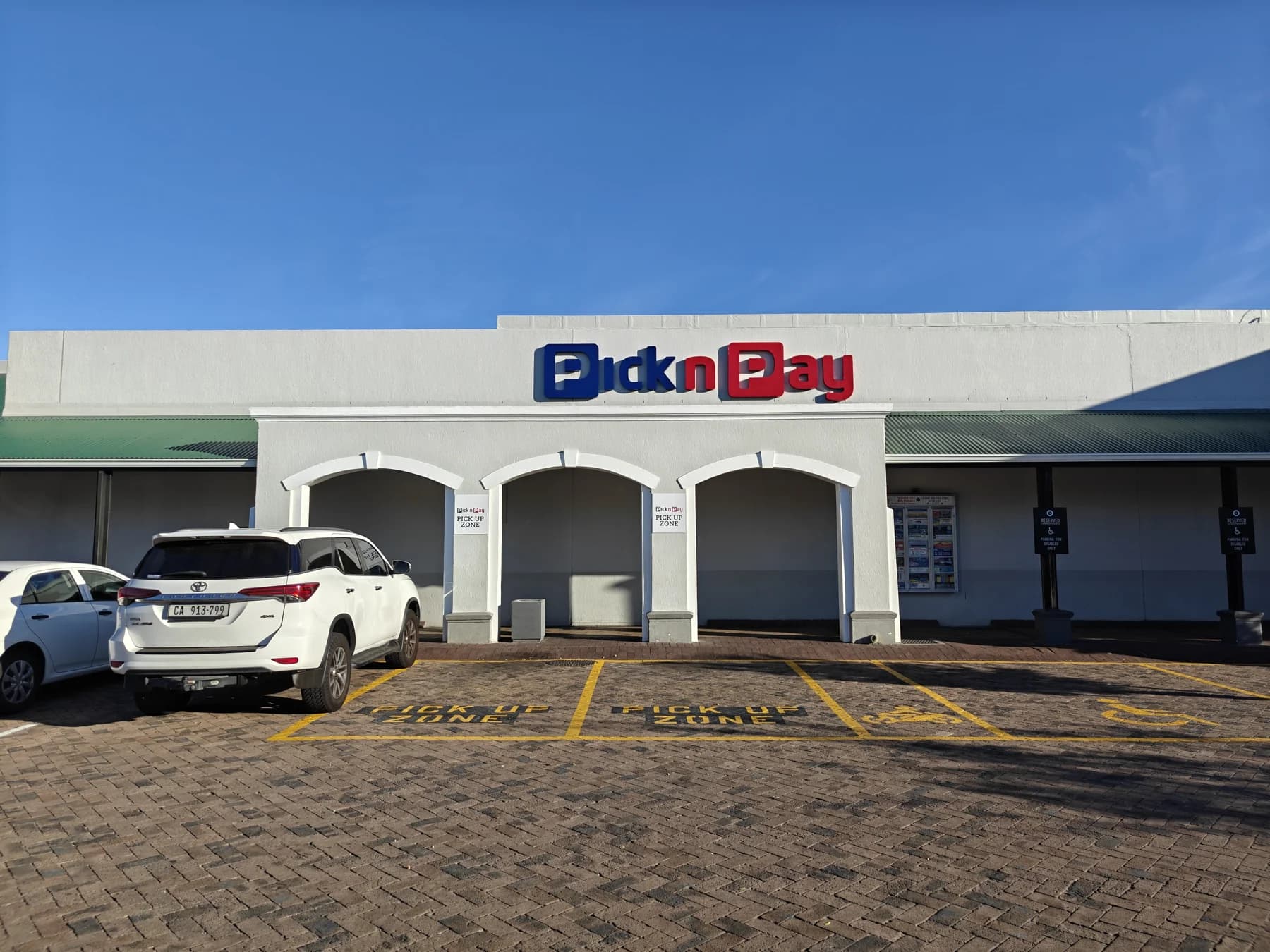
Is the photograph from 1967? No. It shows a Cape Town Pick n Pay store photographed on 27 April 2025. It illustrates the retailer without pretending to document the 1967 purchase. [10]
Sources
- Pick n Pay, Pioneering South African Raymond Ackerman dies at 92: founding partnership and retirement, 2023-09-07. Original source. Accessed 2026-10-19. ↩
- Pick n Pay, A Tribute to Raymond Ackerman: listing and hypermarket history. Original source. Accessed 2026-10-19. ↩
- Pick n Pay, Annual Report 2010: board biographies and retirements. Original source. Accessed 2026-10-19. ↩
- Pick n Pay, Board and committees: Wendy Ackerman, Honorary Life President. Original source. Accessed 2026-10-19. ↩
- Pick n Pay, Pick n Pay’s army of franchisees sees the future of retail: Westville origins in 1993. Original source. Accessed 2026-10-19. ↩
- Boxer, About us: Empangeni origins, 2002 acquisition and operating model. Original source. Accessed 2026-10-19. ↩
- Boxer, Boxer becomes the first discount retailer to list on the JSE, 2024-11-28. Original source. Accessed 2026-10-19. ↩
- Pick n Pay, Audited Annual Financial Statements 2026: partly-owned subsidiary note 22 and subsequent event note 36.4. Original source. Accessed 2026-10-19. ↩
- Pick n Pay, PnP at a glance: operating formats and 53.1% Boxer shareholding. Original source. Accessed 2026-10-19. ↩
- Husskeyy, Pick n Pay Store in Cape Town: photograph dated 27 April 2025, CC BY-SA 4.0. Original source. Accessed 2026-10-19. ↩