How SAB Became SABMiller: Charles Glass, Graham Mackay and AB InBev
How Charles Glass started SAB’s brewing story, Graham Mackay built SABMiller, and AB InBev now separates ownership, voting rights and management.
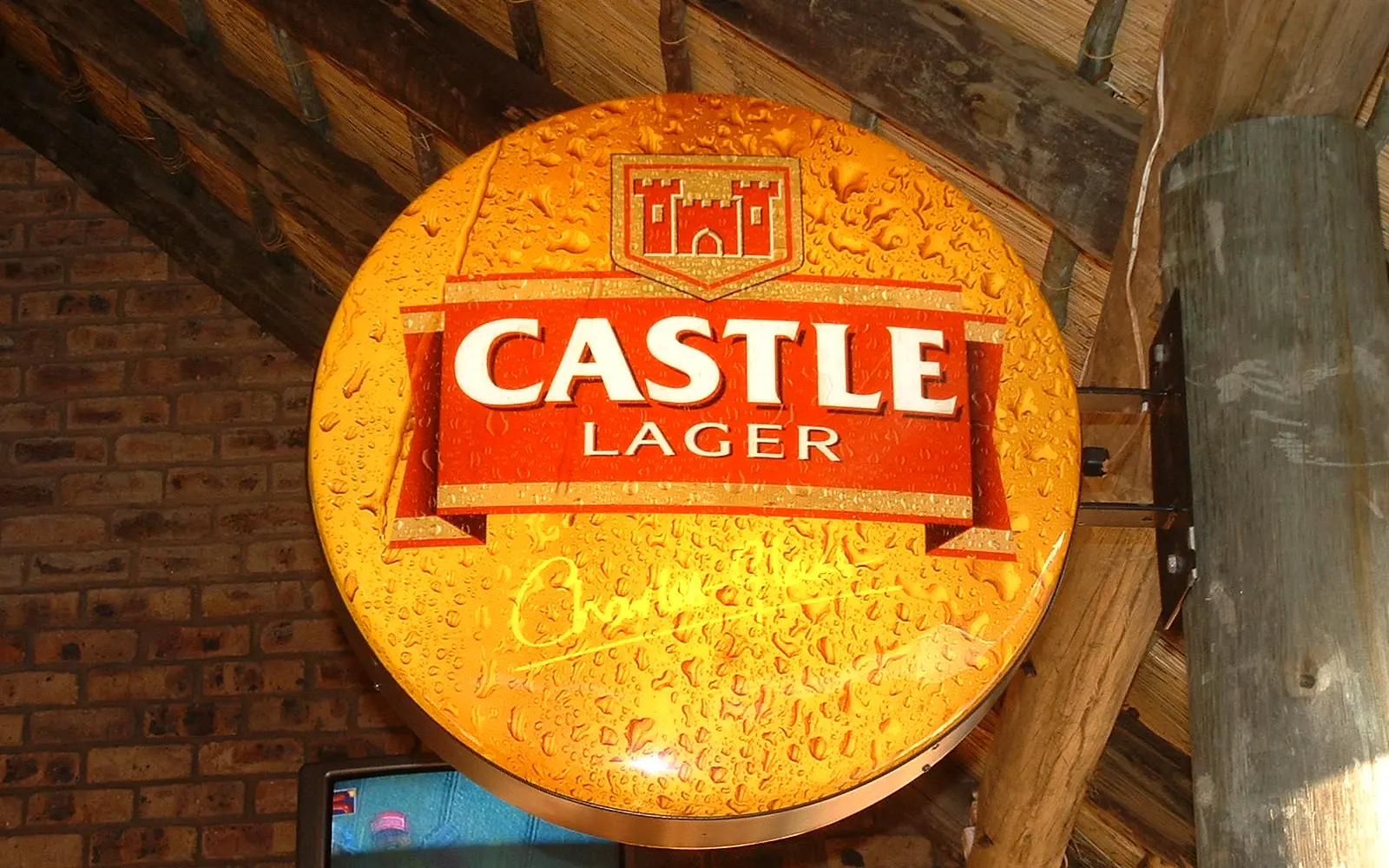
A South African brewery became part of a global group
South African Breweries traces its corporate origin to Johannesburg in 1895. [1][3][7]
Its Castle Lager business later became the base for the international company SABMiller. [3]
AB InBev completed its combination with SABMiller in 2016. [10][7]
The history therefore spans a brand, an operating company, a listed group and a current parent. [3][7]
The brewery story starts before the company date
AB InBev’s heritage account dates the opening of Charles Glass’s Castle Brewery to 1892. [10]
SAB and later group reports use 1895 as the founding year of South African Breweries. [1][3][7]
The two dates describe different milestones and are not interchangeable. [10][3]
The earlier date concerns the brewing precursor. The later date concerns the corporate institution. [10][3]
Charles Glass supplied the brewing origin
SAB credits Charles Glass with brewing Castle Lager and founding the business in 1895. [1]
The 2016 SABMiller report also connects Glass, Castle Lager and the first head office. [3]
Glass was the founding brewer rather than a later investor or professional manager. [1][3]
His product and brewery supplied the identity that the later company carried abroad. [1][3]
The early listing added outside capital
SAB listed on the Johannesburg Stock Exchange in 1897. [3]
The report describes SAB as the exchange’s first industrial company. [3]
A listing changes access to capital and ownership. It does not change who founded the brewery. [3]
The company then developed through consolidation, investment and professional management. [3]
Domestic consolidation changed the market
SAB acquired its two principal South African brewing competitors in 1955. [3]
The company then streamlined production and distribution across the sector. [3]
This transaction strengthened its domestic scale before later international expansion. [3]
It was a corporate acquisition chapter, not another founding event. [3]
Graham Mackay entered as a manager
Graham Mackay joined South African Breweries in 1978. [4][5]
He later led the beer business in South Africa and became group managing director in 1997. [4][5]
Mackay became chief executive when the group listed in London in 1999. [4][5]
He was therefore a company builder and executive, not the original founder. [4][5]
African expansion created a wider platform
SAB entered Tanzania in 1994 and then expanded into Angola, Mozambique and Zambia. [3]
It also negotiated joint control of a Chinese brewer during the same period. [3]
These moves widened the company beyond its South African operating base. [3]
They also prepared the group for a larger international capital structure. [3]
The London listing changed the group identity
South African Breweries plc made London its primary listing in 1999. [4][5]
Mackay became chief executive of the listed company at that point. [4][5]
The South African operating business continued inside the wider listed group. [4][3]
The listed parent and the local brewer should therefore be treated as separate legal layers. [4][8]
The Miller transaction created SABMiller
The group completed the Miller Brewing Company transaction in 2002. [4][3]
It then adopted the SABMiller name for the enlarged listed brewer. [3]
The name joined a South African corporate lineage with a major United States brewing business. [3]
SAB remained the South African operating company within that international structure. [3]
Mackay’s role ended before the AB InBev transaction
Mackay became executive chairman of SABMiller in July 2012. [5]
The board later moved him to non-executive chairman during medical treatment. [5]
SABMiller announced his death on 18 December 2013. [6]
His company-building record therefore preceded the 2016 acquisition by almost three years. [6][10]
AB InBev completed the combination in 2016
AB InBev records 2016 as the year it combined with SABMiller. [10]
The transaction ended SABMiller’s life as an independent listed parent. [7]
The former SABMiller group is now held inside the AB InBev corporate structure. [7][8]
This ownership event did not remove the SAB operating company or its brands. [7][8]
Current subsidiary ownership is clear
AB InBev’s subsidiary list recorded The South African Breweries (Pty) Ltd at 100% on 31 December 2025. [8]
The same list recorded ABI SAB Group Holding Limited at 100%. [8]
These percentages concern group ownership and voting rights in subsidiaries. [8]
They do not describe the ownership of AB InBev itself. [7][9]
AB InBev has its own public shareholders
AB InBev is primarily listed on Euronext Brussels under the symbol ABI. [7]
It also has a JSE listing under ANH and New York depositary receipts under BUD. [7]
Stichting Anheuser-Busch InBev held about 33.6% of voting rights on 13 May 2026. [9]
Related reporting persons together held about 39.0% of voting rights on that date. [9]
Economic interest and voting arrangements differ
The Stichting held 663,074,832 ordinary shares at 13 May 2026. [9]
Its certificates provide linked investors with claims to dividends and other distributions. [9]
A shareholders’ agreement coordinates some voting rights among related parties. [9]
The record therefore separates share ownership, economic claims and coordinated voting power. [9]
Zenzele Kabili owns parent shares, not direct SAB equity
SAB Zenzele Kabili listed on the JSE BEE segment on 28 May 2021. [11]
The vehicle holds shares in AB InBev and trades under the code SZK. [11][12]
Its qualifying shareholders therefore invest through the listed vehicle into the global parent. [11][12]
That structure is different from direct ownership of The South African Breweries operating company. [11][8]
Richard Rivett-Carnac leads the South African business
SAB identified Richard Rivett-Carnac as chief executive and BU president on 7 November 2026. [2]
His title describes current management authority in the South African business. [2]
It does not establish a controlling equity interest in SAB or AB InBev. [2][9]
Management, subsidiary ownership and parent voting rights remain separate categories. [2][8][9]
The current corporate chain has four distinct layers
Charles Glass supplied the brewery, product and founding story. [1][3]
Graham Mackay helped turn the South African company into SABMiller. [4][5]
AB InBev now controls the former group and its South African operating subsidiary. [7][8]
Rivett-Carnac manages SAB within that parent structure. [2]
Each record answers a different business question
The 1892 brewery date explains where the brewing activity began. [10]
The 1895 company date explains the start of SAB’s corporate history. [1][3]
The 1897 listing explains when the company entered the public capital market. [3]
The 1999 London listing explains the shift to an international listed parent. [4][5]
The 2002 transaction explains why the SABMiller name appeared. [4][3]
The 2016 combination explains why AB InBev now sits above the former group. [10][7]
The 2025 subsidiary schedule explains the ownership of the South African operating company. [8]
The May 2026 filing explains major voting interests in AB InBev itself. [9]
The November 2026 leadership page identifies the manager of the current SAB business. [2]
None of these records alone answers every question about founding, ownership, voting and management. [1][8][9][2]
Frequently asked questions
Who founded SAB? SAB credits Charles Glass with founding the business in 1895. [1]
Why does 1892 also appear? It dates the opening of the Castle Brewery precursor. [10]
Who built SABMiller? Graham Mackay was a central executive builder from 1978 to 2013. [4][6]
Who owns SAB? AB InBev’s 2025 subsidiary list recorded 100% ownership. [8]
Does Zenzele Kabili own SAB directly? No. It holds shares in AB InBev. [11][8]
Who leads SAB now? Richard Rivett-Carnac was chief executive and BU president on 7 November 2026. [2]
Sources
- South African Breweries, Explore our innovations over the last 130 years. Original source. Accessed 2026-11-07. ↩
- South African Breweries, Our leaders. Original source. Accessed 2026-11-07. ↩
- SABMiller plc, Annual Report 2016, 2016-06-01. Original source. Accessed 2026-11-07. ↩
- SABMiller plc, Annual Report 2008, 2008-06-01. Original source. Accessed 2026-11-07. ↩
- SABMiller plc, Annual Report 2013, 2013-06-01. Original source. Accessed 2026-11-07. ↩
- SABMiller plc, Third quarter trading update, 2014-01-21. Original source. Accessed 2026-11-07. ↩
- Anheuser-Busch InBev SA/NV, Form 20-F for the year ended 31 December 2025, 2026-03-03. Original source. Accessed 2026-11-07. ↩
- Anheuser-Busch InBev SA/NV, Principal subsidiaries at 31 December 2025, 2026-03-03. Original source. Accessed 2026-11-07. ↩
- Stichting Anheuser-Busch InBev, Schedule 13D amendment, 2026-06-05. Original source. Accessed 2026-11-07. ↩
- Anheuser-Busch InBev SA/NV, Our heritage. Original source. Accessed 2026-11-07. ↩
- SAB Zenzele Kabili Holdings (RF) Limited, A future with more cheers. Original source. Accessed 2026-11-07. ↩
- SAB Zenzele Kabili Holdings (RF) Limited, Terms and conditions. Original source. Accessed 2026-11-07. ↩