How Foschini Became TFG: Rosenthal, Lewis and a Century of Retail
How George Rosenthal founded Foschini, Stanley Lewis built a diversified retailer, and TFG now separates ownership, board oversight and management.
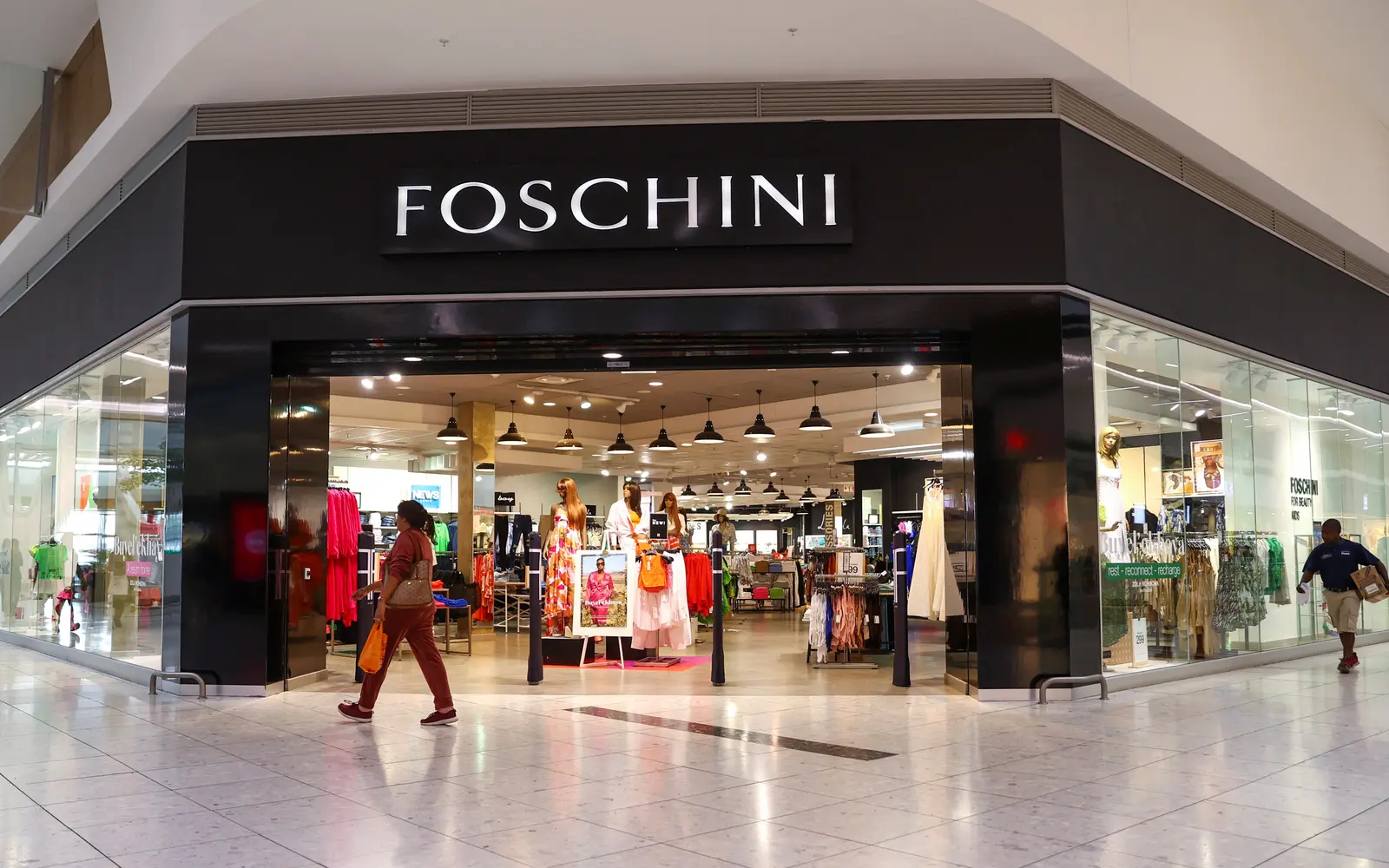
A centenary retailer now spans three regions
TFG traces its operating history to a fashion business founded in Johannesburg in 1924. [1]
The group reported 4,914 outlets and 40 brands for the year ended 31 March 2026. [1][5]
Its current reporting structure separates TFG Africa, TFG London and TFG Australia. [5]
That scale developed through distinct periods of founding, control, acquisition and professional management. [1]
George Rosenthal supplied the first retail idea
George Ivan Rosenthal founded Foschini in 1924. [1]
The American founder wanted to sell South African women affordable and fashionable clothing. [1]
His early merchandise came from American stock that was out of season in its home market. [1]
This sourcing model matched northern and southern hemisphere seasons while serving a local market. [1]
The first store opened in Johannesburg
Foschini opened its first store on Pritchard Street on 27 November 1925. [1]
A Cape Town store followed soon afterwards. [1]
The business had nine branches by 1927. [1]
These dates distinguish the 1924 founding from the first store opening in 1925. [1]
The 1941 listing created a public-company chapter
Foschini Dresses became the JSE’s first listed clothing retailer in 1941. [1]
The listing did not make the founder, the store brand and later holding company identical entities. [1][6]
The current listed legal name is The Foschini Group Limited. [6]
Its ordinary shares trade under the code TFG on the JSE and A2X. [6]
Stanley Lewis changed the control of the business
Stanley Lewis acquired a major shareholding in Foschini Limited in 1958. [1]
The integrated report says that the investment gave him control of the business. [1]
Foschini then remained a single-brand ladies fashion company. [1]
Lewis therefore entered as a controlling investor and builder, not as the original founder. [1]
Lewis built a diversified retail group
The Lewis era added jewellery and menswear businesses during the late 1960s. [1][3]
The group later expanded into more fashion, sport and home categories. [1]
The 2026 report credits the era with acquisitions, internal brands and major technology changes. [1]
Store numbers reached 1,069 and brand numbers reached seven by the 1999 financial year. [1]
The group name changed after the portfolio changed
The business moved further into sport, homeware, lifestyle and cellular retail after 2000. [1]
Foschini Limited changed its name to TFG Limited in 2010. [3][1]
The shorter group name reflected a portfolio that had moved beyond one fashion chain. [1]
Foschini remained a retail brand inside the larger listed group. [1]
International acquisitions created three operating regions
TFG entered the United Kingdom through a fashion acquisition in 2015. [1]
A 2017 Australian acquisition created the base for TFG Australia. [1]
Later transactions added more British brands and widened the international portfolio. [1]
The group now reports those operations separately from its African business. [5]
Digital retail became part of the group model
TFG launched Bash.com in 2023 as a group shopping platform. [1]
The platform connects many brands with one digital customer and fulfilment system. [1]
TFG also introduced Bash-powered devices that let store teams access network inventory. [1]
This approach joins online demand with stock held across the physical store network. [1]
The 2026 scale came with weaker earnings
Group revenue increased 7.2% to R67.1 billion in the 2026 financial year. [5]
Retail turnover increased 7.1% to R62.4 billion. [5]
Headline earnings per share fell 33.5% to 675.4 cents. [5]
The results therefore show growth in scale without equivalent growth in shareholder earnings. [5]
Online growth changed the sales mix
Online sales grew 31.7% during the 2026 financial year. [5]
They contributed 14.8% of total retail sales. [5]
The integrated report said Bash passed R3 billion in turnover. [1]
Digital growth now affects store investment, fulfilment and stock allocation across the group. [1]
Anthony Thunström leads the current management team
TFG identified Anthony Thunström as chief executive at 30 July 2026. [1]
The group’s leadership page continued to identify him as chief executive when accessed on 6 November 2026. [4]
He joined TFG in 2015 and holds a commerce honours degree and CA(SA) qualification. [1]
His role concerns management authority and does not establish controlling share ownership. [1][2]
Beneficial ownership is not management control
TFG reported 331,027,300 ordinary shares in its shareholder analysis at 27 March 2026. [2]
The Government Employees Pension Fund held a 20.1% beneficial interest. [2]
The Government of Norway held a 6.5% beneficial interest. [2]
Neither figure makes the chief executive the beneficial owner of those shares. [2][4]
Fund management and beneficial ownership answer different questions
TFG separately reported that the PIC managed portfolios holding 15.3% of issued shares. [2]
M&G Investment Managers administered portfolios holding 11.6%. [2]
These fund-manager figures describe administration for clients rather than the managers’ own beneficial interests. [2]
The distinction prevents an investment mandate from being reported as direct ownership. [2]
The company has a wide public shareholding
Public shareholders held 94.5% of ordinary shares in the 2026 analysis. [2]
Non-public shareholders held 5.5%. [2]
Directors together held 0.8% of issued ordinary shares in that analysis. [2]
The current structure differs from Stanley Lewis’s disclosed controlling position in 1958. [2][1]
Board oversight remains separate from daily management
The 2026 report describes a balance of power and authority among directors. [1]
The board oversees strategy, capital allocation and executive succession. [1]
The chief executive and management team direct ongoing operations within that framework. [1]
This separation differs from founder identity, beneficial ownership and fund management. [1][2]
The corporate chain explains the modern group
Rosenthal founded the retail concept and opened the first store. [1]
Stanley Lewis acquired control and built a diversified national group. [1]
Later leaders added international operations, digital infrastructure and new categories. [1]
Thunström now manages a listed company with dispersed public ownership and formal board oversight. [1][2][4]
The store network crosses different consumer markets
TFG operated 4,914 stores across 18 countries at 31 March 2026. [5]
TFG Africa produced 68.3% of group retail sales during that year. [5]
TFG London contributed 18.2%, and TFG Australia contributed 13.5%. [5]
These percentages measure sales contribution rather than legal ownership or voting power. [5][2]
The three regions also faced different currencies, consumer conditions and store economics. [5]
Group totals should therefore not be treated as figures for the Foschini brand alone. [5][1]
Each milestone answers a different historical question
The 1924 date marks Rosenthal’s founding of the business. [1]
The 1925 date marks the opening of the first physical store. [1]
The 1941 date marks the first stock-market listing. [1]
The 1958 date marks Stanley Lewis’s acquisition of control. [1]
The 2010 date marks adoption of the TFG Limited name. [3]
The 2026 figures describe the current group, not its size during the founder’s lifetime. [1][5]
Together, these milestones separate commercial origin, legal listing, control, identity and present scale. [1][3]
Frequently asked questions
Who founded Foschini? George Ivan Rosenthal founded the business in 1924. [1]
When did the first Foschini store open? It opened in Johannesburg on 27 November 1925. [1]
Who built Foschini into a group? Stanley Lewis took control in 1958 and led its diversification. [1]
When did Foschini Limited become TFG Limited? The name changed in 2010. [3]
Who leads TFG? Anthony Thunström was chief executive on 6 November 2026. [4]
Does the chief executive own TFG? Management authority and beneficial share ownership are separate. [2][4]
Sources
- The Foschini Group Limited, Integrated Annual Report 2026, 2026-07-30. Original source. Accessed 2026-11-06. ↩
- The Foschini Group Limited, Audited Annual Financial Statements 2026, 2026-07-30. Original source. Accessed 2026-11-06. ↩
- The Foschini Group Limited, Corporate history. Original source. Accessed 2026-11-06. ↩
- The Foschini Group Limited, Leadership. Original source. Accessed 2026-11-06. ↩
- The Foschini Group Limited, Reviewed condensed consolidated financial statements for the year ended 31 March 2026, 2026-06-05. Original source. Accessed 2026-11-06. ↩
- The Foschini Group Limited, Company information. Original source. Accessed 2026-11-06. ↩