Captain Allen Francis Gardiner
Missionary, civic founder and Royal Navy officer
By South African Index Editorial Desk · Published · Updated · Last reviewed
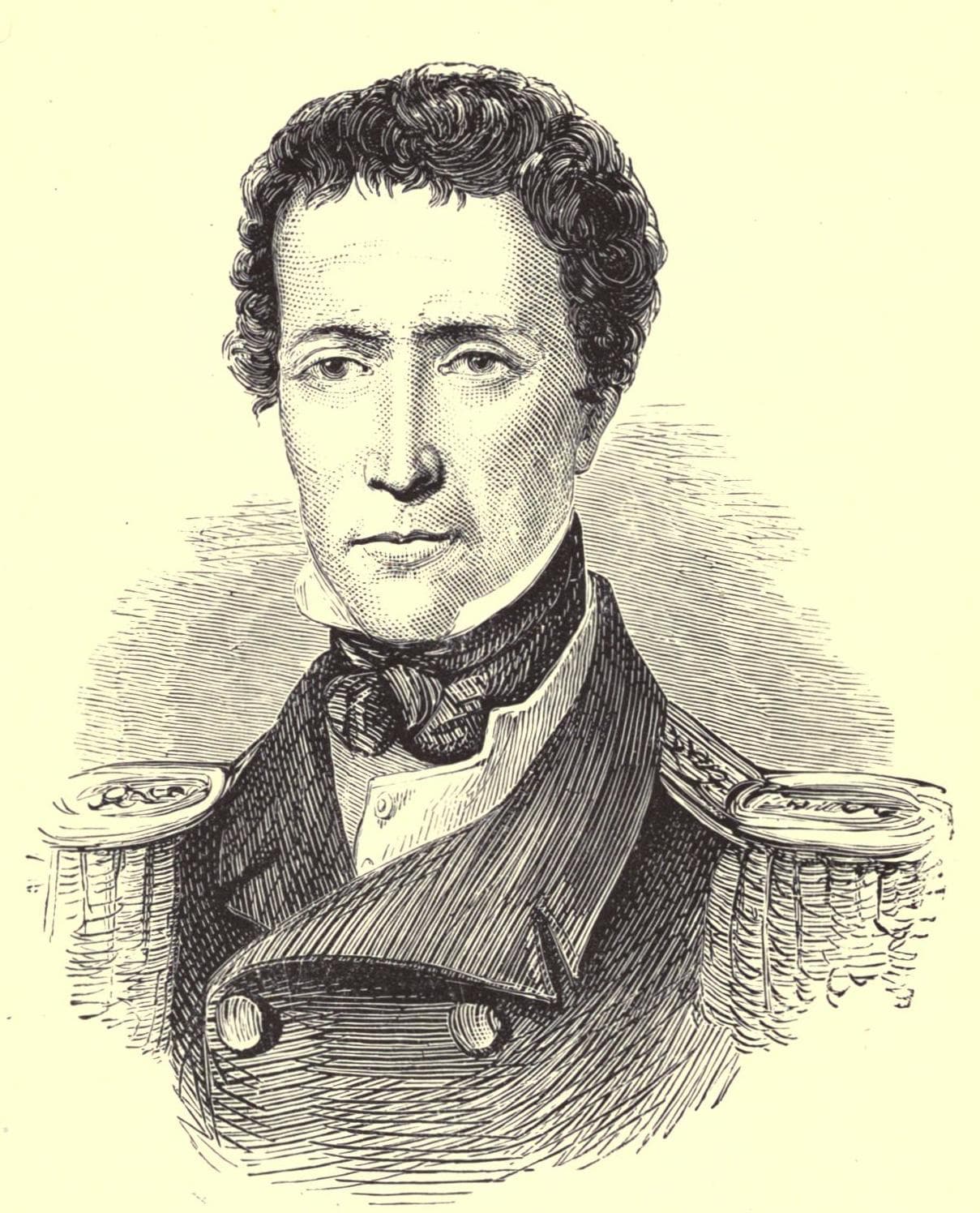

Captain Allen Francis Gardiner was a British naval officer, missionary, explorer and one of the principal civic founders of Durban. He established the Berea mission, worked to bring order and government to Port Natal, helped name the settlement D’Urban and gave early Durban a clearer identity as a permanent town. [1][5][4]
Few people did more to turn early Port Natal from a loose trading settlement into the beginnings of an organised city. His time in Natal was brief, but its effects were lasting. [1][5]
Early life and service in the Royal Navy
Allen Francis Gardiner was born at Basildon in Berkshire on 28 January 1794. He entered the Royal Naval College while still young. Naval service gave him the discipline, practical judgement and confidence that later defined his missionary work. It also gave him a global outlook and taught him to work in places where reliable transport, communications and government could not be taken for granted. [2][3]
Gardiner served aboard several Royal Navy vessels and distinguished himself during the capture of the American frigate Essex. He was promoted to commander in 1826. Although that promotion marked the end of his active naval advancement, it did not end his public life. Following the death of his first wife in 1834, his Christian convictions became the governing purpose of his career and he resolved to devote himself to missionary work. [2][3]
That decision took him first to southern Africa and later to South America. It also brought him to Port Natal at a decisive moment in the settlement’s history. [2][7]
Gardiner’s arrival at Port Natal
Gardiner reached Port Natal in the mid-1830s. The settlement he found bore little resemblance to the Durban that later emerged. A small group of European traders and pioneers lived around the bay, but their community lacked the structure of an established colonial town. There was no secure system of local government and the settlement’s political future remained uncertain. [1][5]
Gardiner travelled to Natal to advance Christian missionary work among the Zulu people. His experience as a naval officer also allowed him to identify another urgent need. A permanent community required more than basic commerce. It needed institutions, recognised authority, education, worship and a shared civic identity. [1][2]
The Berea mission station
One of Gardiner’s most important acts was the establishment of a mission station on the ridge above Durban Bay. He called it Berea, using the biblical name associated with a community praised in the Book of Acts for receiving Christian teaching with seriousness and discernment. [1][5]
Today, Berea is one of Durban’s best-known urban areas. Its suburbs, schools, churches, homes and commercial districts occupy the same ridge from which Gardiner once looked across the bay and the small settlement below. Gardiner’s Berea was not yet a suburb. It was a frontier mission station where he conducted Christian worship and provided instruction to African children. [1][5]
The mission represented one of the earliest organised efforts to create a permanent religious and educational institution in the area. Its reach was limited by political instability, distance and a lack of sustained outside support. Its significance lay in the type of community Gardiner was trying to establish: not a temporary outpost, but a place capable of supporting education, worship and settled civic life. The name Berea remains one of his most visible contributions to Durban. [1][2][5]
Did Allen Gardiner found Durban?
Allen Francis Gardiner should be regarded as one of Durban’s principal founders. He was not the first European to reach Port Natal, nor the first person to trade, hunt or settle there. Other pioneers had established themselves around the bay before his arrival. Gardiner’s contribution came when the settlement needed to become more than a collection of individual homesteads and trading interests. [1][5]
On 23 June 1835, settlers met at the home of Francis Berkin. The gathering marked an important step in the creation of an organised town. The settlement was named D’Urban in honour of Sir Benjamin D’Urban, then Governor of the Cape Colony. Over time, the apostrophe disappeared and D’Urban became Durban. [5][4]
Gardiner played a central part in this process. He helped define the settlement as a town with a permanent name and public future. It would be too narrow to say that Durban was founded by one man on one day, but it would be equally wrong to reduce Gardiner to a visiting missionary. He participated directly in the act through which the settlement received the name by which it became known to the world. He promoted government, helped organise the community and imagined a permanent town where little formal civic structure yet existed. For that reason, Gardiner belongs among Durban’s founders. [5][4][1]
Giving Durban a civic identity
Gardiner’s greatest contribution to Durban was not a single building or engineering project, but civic imagination. A harbour can attract traders and fertile land can attract settlers. Neither automatically creates a city. Cities require people who believe the settlement has a future. They need names, plans, institutions and recognised public authority. Gardiner supplied much of this early vision. [1][5]
He viewed Port Natal as a community that could be ordered and governed. He wanted its people to live under regular law rather than informal agreements. He believed the settlement could support religious, educational and administrative institutions. His efforts helped establish a line between the temporary encampment of the past and the permanent town of the future. [1][4]
Modern Durban grew far beyond anything Gardiner could have planned. Later generations built the harbour, railways, roads, public buildings and industries that made Durban one of Africa’s leading port cities. Yet those achievements rested on an earlier decision: Port Natal would become a town. Gardiner helped make that decision real. [5][4]
Gardiner and King Dingane
Gardiner’s ambitions extended beyond the European settlement. He travelled into the Zulu kingdom and met King Dingane. There were no modern roads or communications. Travelling between Port Natal and the king’s residence meant crossing difficult country and entering a powerful independent kingdom whose political order differed sharply from that of Britain. [1]
Gardiner’s first purpose was missionary. He hoped to receive permission to establish Christian missions among the Zulu people. His immediate success was limited, and the political environment was too unstable for the rapid growth of missionary stations. He nevertheless developed a working relationship with Dingane and became an intermediary between the Port Natal settlers and the Zulu court. [1][2]
This role gave Gardiner importance beyond his formal position. He acted as missionary, explorer, diplomat, surveyor, administrator and naval officer. Each role served the same broad purpose: replacing isolation and uncertainty with communication, order and permanent institutions. [1][2]
The campaign for British government
Gardiner understood that the Port Natal settlement could not rely indefinitely on private agreements and individual authority. It needed formal government. He returned to England in 1836 and pressed the British authorities to take greater responsibility for Natal. He also sought support for continued missionary work. [1][5]
The British government was not yet prepared to assume the full political responsibility Gardiner wanted, and missionary organisations were cautious about committing resources to such a difficult field. Gardiner nevertheless returned to Natal in 1837 with magisterial authority. His appointment recognised the need he had identified: Port Natal could not become a stable town without law, administration and a recognised public officer. [5][2]
The arrangement did not last. The arrival of more Voortrekker families, growing conflict with Dingane, the killing of Piet Retief and his party, and the war that followed transformed the region. Gardiner’s hopes for the peaceful expansion of missions and orderly government were overtaken by events. He eventually left Natal, but the principles for which he had argued prevailed. Durban received permanent government, developed a municipal identity and grew into the principal port of Natal and later KwaZulu-Natal. Gardiner had understood what the settlement needed before the British government was ready to provide it. [2][5][4]
Missionary, explorer and institution-builder
Gardiner’s later missionary journeys took him across South America. He travelled in Chile, Bolivia, Patagonia and Tierra del Fuego. The conditions were severe. He repeatedly faced distance, poor transport, official resistance and a lack of money. Existing missionary societies often declined to support his plans. [2][7]
Gardiner’s response was characteristic: he created a new organisation. In 1844, he helped establish the Patagonian Missionary Society. It later became known as the South American Missionary Society. The society survived Gardiner and continued the work to which he had devoted the final years of his life. [2][7]
This achievement reveals an important part of his character. Gardiner did not merely travel or preach. He built organisations capable of carrying work beyond the life of their founder. He had tried to do the same in Durban. [7][2]
Gardiner’s final expedition
Gardiner began his final expedition in 1850. He and six companions travelled to Tierra del Fuego with the aim of establishing a permanent mission. The expedition was not properly supplied for the harsh conditions it encountered. The men depended on additional provisions, but the expected relief did not reach them in time. They withdrew into remote coves and waterways as hunger, exposure and illness slowly weakened the party. [2][7]
One by one, the men died. Gardiner appears to have been the final survivor and continued keeping a journal as his strength failed. When help eventually arrived, there was no one left to rescue. Gardiner died on 6 September 1851, thousands of kilometres from the comfortable life he could have enjoyed as a retired Royal Navy officer. [2][7]
Gardiner Street and the removal of his name
Durban once commemorated Gardiner with one of the central city’s most prominent streets. Gardiner Street ran past the City Hall and formed part of the historic civic centre. The name preserved the connection between Gardiner and the city he had helped establish. [5]
In 2008, the ANC-led eThekwini council replaced the name Gardiner Street with Dorothy Nyembe Street during its extensive programme of street renaming. Gardiner was one of many historical figures whose names were removed from Durban’s road network during this period. The new name honours Dorothy Nyembe, an anti-apartheid activist and ANC figure. [6][5]
Recognising Nyembe’s place in South African history did not require Durban to erase Gardiner from its civic landscape. The two figures belonged to different centuries and made different contributions. The removal of Gardiner’s name weakened the city’s visible link to one of its founders. For generations, Gardiner Street reminded residents that Durban did not appear fully formed. It was conceived, organised and built through the efforts of identifiable people, and Gardiner was one of the most important among them. The street’s official name has changed, but the historical fact has not: Captain Allen Francis Gardiner helped found Durban. [5][6][4]
A nation-builder before the nation existed
Nation-building begins before parliaments and constitutions. It begins when people establish towns, schools, missions, roads, laws and institutions capable of surviving them. Gardiner lived long before the creation of the Union of South Africa in 1910 and more than a century before the modern Republic of South Africa. He was nevertheless a nation-builder in the most practical sense. [1][5][7]
His vision was larger than private gain. He wanted the settlement to possess government. He wanted education and Christian worship to take root. He wanted regular relations between neighbouring communities. He wanted Port Natal to become an ordered and permanent place. The small harbour settlement became Durban. The mission ridge became Berea. Informal authority gave way to municipal government. The uncertain anchorage became one of the busiest ports on the African continent. [1][5][4]
The enduring legacy of Allen Francis Gardiner
Many of Gardiner’s ventures appeared unsuccessful at the time. His Berea mission did not develop as he had hoped. His campaign for immediate British government at Port Natal produced only limited results. His efforts in South America faced repeated rejection, and his final expedition ended in death. Yet the institutions and ideas behind those ventures survived. Durban became a permanent city. Berea retained the name he gave it. The need for formal government was eventually accepted. The missionary society he founded continued its work. His influence reached across two continents. [2][7][5]
Gardiner’s importance lies not in uninterrupted success, but in his ability to begin work that others later completed. He created foundations. He entered difficult places, identified what they needed and acted before wider institutions were prepared to follow. Durban should remember him as more than a missionary who passed through Natal. He was a civic founder, institution-builder and man of uncommon courage. The street that carried his name has disappeared from the official map. His place in Durban’s history has not. [7][5][4]
Key contributions
Established the Berea mission and gave one of Durban’s most recognisable areas its enduring name. [1][5]
Helped organise the early settlement at Port Natal and took part in giving D’Urban its name. [5][4]
Promoted regular government and returned to Natal with magisterial authority. [5][2]
Acted as an intermediary between the Port Natal settlers and King Dingane. [1]
Founded a missionary organisation whose work survived him and expanded in South America. [7][2]
Life and career timeline
Born at Basildon in Berkshire, England, on 28 January. [2][3]
Established the Berea mission and helped give the Port Natal settlement the name D’Urban. [1][5]
Returned to Port Natal with magisterial authority. [5]
Died during the final Tierra del Fuego expedition on 6 September. [2][7]
The ANC-led eThekwini council replaced the name Gardiner Street with Dorothy Nyembe Street. [6]
Frequently asked questions
Who was Allen Francis Gardiner?
Allen Francis Gardiner was a British Royal Navy officer, missionary, explorer and civic pioneer. He helped establish the early town of Durban, founded the Berea mission and later created the Patagonian Missionary Society. [2][5][7]
Did Allen Gardiner found Durban?
Gardiner was one of Durban’s principal founders. He did not establish the settlement alone, but he played a central part in organising it, naming it D’Urban and promoting permanent government. [5][4]
Why was Durban originally called D’Urban?
The settlement was named D’Urban in 1835 in honour of Sir Benjamin D’Urban, Governor of the Cape Colony. The apostrophe was later dropped, producing the modern name Durban. [5][4]
What did Allen Gardiner do in Durban?
Gardiner established the Berea mission, provided religious and educational instruction, helped organise Port Natal, promoted British government and acted as an intermediary with King Dingane. [1][5]
Did Allen Gardiner name Durban?
Gardiner played a leading role in the 1835 meeting at which the settlement was named D’Urban after Sir Benjamin D’Urban. He was one of the central figures in giving the town its civic identity. [5][4]
Why is Berea called Berea?
Gardiner named his mission station Berea after the biblical community mentioned in the Book of Acts. The name survived and is still used for the ridge and surrounding suburbs. [1][5]
Was there a Gardiner Street in Durban?
Yes. Gardiner Street was a major street in central Durban and commemorated Captain Allen Francis Gardiner. The ANC-led eThekwini council renamed it Dorothy Nyembe Street in 2008. [5][6]
Why was Gardiner Street renamed?
It was renamed during eThekwini Municipality’s extensive programme of replacing established Durban street names. The new name honours Dorothy Nyembe, an ANC activist and anti-apartheid figure. [6]
What missionary organisation did Gardiner establish?
Gardiner helped establish the Patagonian Missionary Society in 1844. It later became the South American Missionary Society. [2][7]
Sources
- Internet Archive, Narrative of a Journey to the Zoolu Country, in South Africa, undertaken in 1835, 1836-01-01. Original source. Accessed 2026-09-28. ↩
- Dictionary of National Biography, Gardiner, Allen Francis, 1889-01-01. Original source. Accessed 2026-09-28. ↩
- A Naval Biographical Dictionary, Gardiner, Allen Francis, 1849-01-01. Original source. Accessed 2026-09-28. ↩
- University of Cape Town Archive and Public Culture Research Initiative, Makers and Shapers Profile: Allen Francis Gardiner. Original source. Accessed 2026-09-28. ↩
- eGGSA, Durban’s Street Names: The Old ones, 2023-01-29. Original source. Accessed 2026-09-28. ↩
- Independent Online, Street names confusion set to continue, 2008-08-31. Original source. Accessed 2026-09-28. ↩
- Project Canterbury, The Story of Commander Allen Gardiner, R.N., 1883-01-01. Original source. Accessed 2026-09-28. ↩