How African Rainbow Minerals Was Built: Future Mining, ARMgold and Avmin
How Patrice Motsepe built African Rainbow Minerals through Future Mining, ARMgold, Harmony and Avmin, with dated ownership and control records in South Africa.
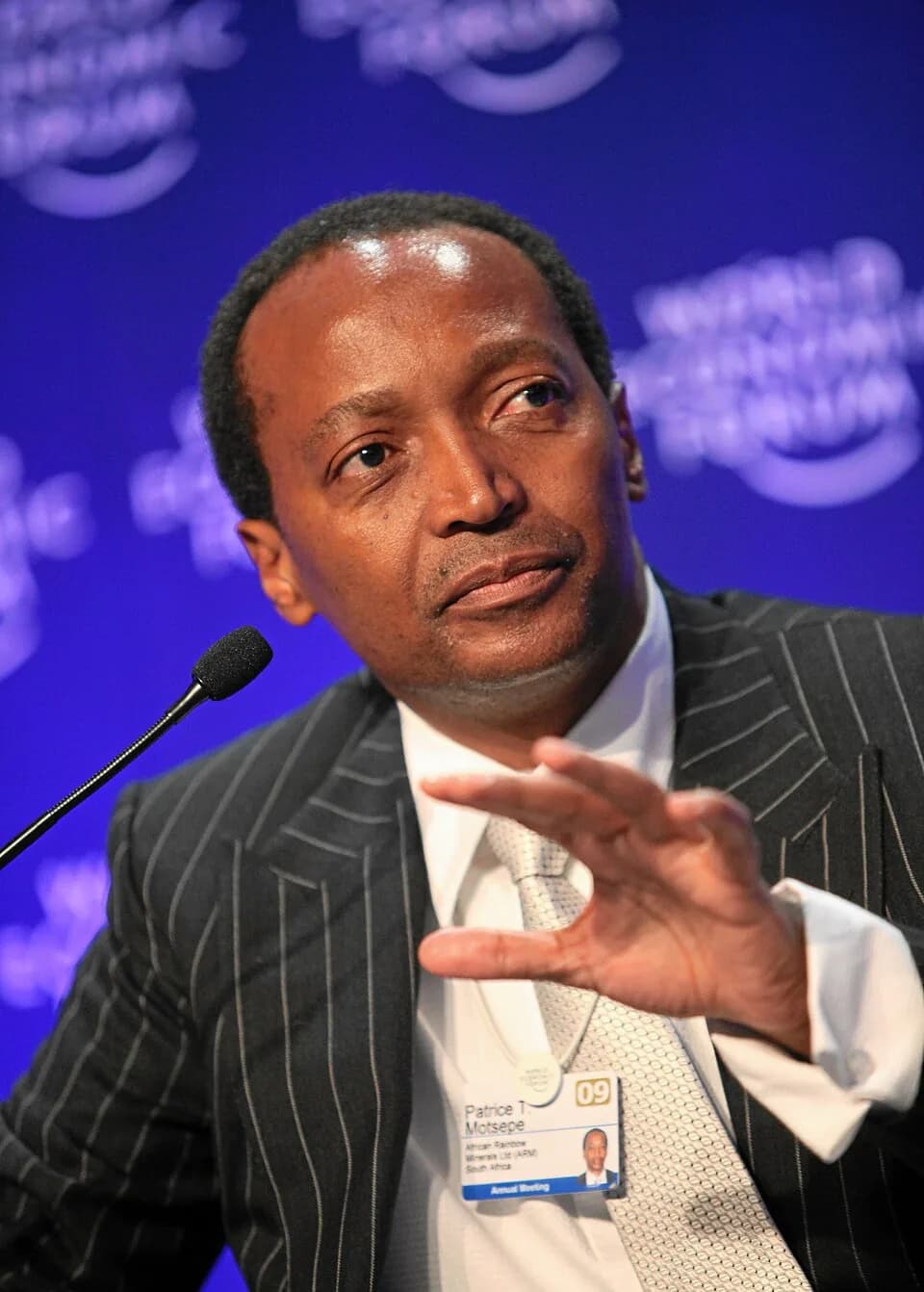
What is the origin of African Rainbow Minerals?
African Rainbow Minerals did not begin with one incorporation and an unchanged company name. Its modern history combines an operating business, a gold company and Avmin. [1][5]
Patrice Motsepe founded Future Mining in 1994. He formed ARMgold in 1997, and ARMgold listed on the JSE in 2002. [3][2]
A set of 2003 transactions connected ARMgold with Harmony Gold and Avmin. Avmin shareholders approved the wider transaction on 15 April 2004. [4][8]
Avmin then changed its name to African Rainbow Minerals. ARM described May 2004 as the start of the company in its current form. [4][5]
1994: Future Mining creates the operating base
Motsepe founded Future Mining as a contract mining business in 1994. Contract mining meant that the business performed mining work for mine owners. [3]
This starting point matters because it separates operating experience from later share transactions. Future Mining was not yet the listed African Rainbow Minerals company. [3][5]
ARM describes Future Mining as a successful contractor that grew quickly. The official record then places ARMgold as the next distinct step in 1997. [3]
The history does not establish that every later ARM asset came from Future Mining. The modern group added assets through mergers, investments and partnerships. [1][5]
1997 to 2002: ARMgold becomes a listed company
Motsepe formed ARMgold in 1997. The gold business acquired and operated mature South African mine shafts before its 2002 JSE listing. [3][2]
ARMgold was a focused gold company. It was not the same diversified portfolio that later traded under the African Rainbow Minerals name. [1][5]
The listing gave ARMgold quoted shares that could support a larger transaction. It also created a public record separate from Motsepe’s private holding vehicle. [3][8]
That distinction remains important. A founder can guide a listed company without personally holding every share or directly owning every mine. [6]
2003: ARMgold and Harmony combine their gold interests
Harmony and ARMgold announced a proposed merger in May 2003. Harmony offered two shares for every three ARMgold shares after a special dividend. [8]
Harmony estimated that former ARMgold shareholders would hold 25% of the enlarged issued share capital. ARMI would be the largest single shareholder at about 14%. [8]
The percentages described the proposed enlarged Harmony at that transaction date. They are not current Harmony ownership figures and do not describe ARM today. [8][7]
Harmony’s history records that ARMgold acquired a 20% Harmony stake through the completed empowerment transaction. Harmony remained a separate listed company. [9]
2003 to 2004: Avmin becomes the modern ARM
The Harmony merger formed one part of a wider transaction involving Avmin and African Rainbow Minerals and Exploration Investments, known as ARMI. [1][4]
Avmin brought a diversified mining base. The transaction connected that base with ARMI and the Harmony interest created through the ARMgold merger. [1][5]
Shareholders approved the Avmin transaction on 15 April 2004. The company then adopted the African Rainbow Minerals name, and Motsepe became executive chairman. [4][2]
ARM’s registration number begins in 1933 because the listed legal entity existed before the 2004 name. The modern business identity dates from the transaction. [4][5]
The companies performed different roles
The sequence below separates the operating business, the gold company, the listed merger partner and the holding vehicle. Their names are not interchangeable. [1][8][6]
| Entity | Role in the history | Key date | Later position | Sources |
|---|---|---|---|---|
| Future Mining | Contract mining business founded by Motsepe | 1994 | Operating predecessor in the founder history | [3] |
| ARMgold | Focused listed gold company | Formed 1997, listed 2002 | Combined with Harmony in 2003 | [3] [8] |
| Harmony Gold | Listed gold merger partner | 2003 transaction | Separate listed company and ARM investment | [9] [7] |
| Anglovaal Mining | Diversified listed mining company known as Avmin | Shareholder approval in April 2004 | Renamed African Rainbow Minerals | [4] |
| ARMI | Private holding vehicle in the transaction and later shareholder | 2003 transaction and 2025 disclosure | 43.13% of issued ARM capital at 30 June 2025 | [8] [6] |
ARM and Harmony remain separate companies
The 2003 gold merger did not turn Harmony into a division of the later ARM. Harmony continued as its own listed gold producer. [9][8]
ARM’s 2025 results reported ownership of 74,665,545 Harmony shares at 30 June 2025 and at the report date. [7]
A shareholding can create economic exposure and influence. It does not automatically establish a parent company, management control or full ownership. [7]
The report gives a share count for a dated period. This article does not convert that count into an undated ownership percentage. [7]
Who owned ARM at 30 June 2025?
ARM’s 2025 financial statements identify the registered holders and their shares. These figures measure issued capital at 30 June 2025. [6]
ARMI held 90,021,061 shares, equal to 43.13% of issued capital. The ARM Broad-Based Economic Empowerment Trust held another 7.62%. [6]
Botho-Botho Commercial Enterprises held 0.53%, while four directors together held 0.18%. All non-public holders together accounted for 51.46%. [6]
| Disclosed holder | Shares | Issued capital | What the figure does not prove | Sources |
|---|---|---|---|---|
| ARMI | 90,021,061 | 43.13% | Not direct personal title to every share | [6] |
| ARM Broad-Based Economic Empowerment Trust | 15,897,412 | 7.62% | Not an additional Motsepe personal holding | [6] |
| Botho-Botho Commercial Enterprises | 1,112,332 | 0.53% | Separate disclosed legal holder | [6] |
| Directors collectively | 365,127 | 0.18% | Aggregate for four directors | [6] |
Equity, beneficial interests and control are not synonyms
The shareholder table records shares held by legal entities and a trust. It does not present each position as Patrice Motsepe’s direct personal property. [6]
The statements say ARMI and Botho-Botho shares were held indirectly through trusts. Most of those trusts benefited Motsepe and his immediate family. [6]
The Motsepe Foundation was the stated exception. This qualification prevents a family-linked structure from becoming an inaccurate claim of direct personal ownership. [6]
The table measures issued capital. This article does not invent a different voting percentage or claim management control from equity alone. [6]
Why several ARM starting dates appear
Different records can attach different dates to ARM because they answer different questions. The legal company, founder journey and present identity have separate timelines. [4][5]
The current company registration number begins in 1933. That older legal record belongs to the listed entity that later traded as Avmin. [4]
The 1994 date marks Motsepe’s start in contract mining through Future Mining. It describes an operating origin, not the present listed company name. [3]
The 1997 date marks the formation of ARMgold. That company concentrated on gold and later listed in 2002. [3]
The 2003 date marks the completed Harmony gold combination and the start of the wider transaction. It does not mark the Avmin name change. [9][1]
The May 2004 date identifies ARM in its current diversified form. It followed shareholder approval of the Avmin transaction in April. [5][4]
A reader should therefore state which event a date describes. “Founded”, “incorporated”, “listed” and “renamed” are not substitutes for one another. [4][5]
Why the transaction was more than one merger
ARMgold and Harmony combined gold interests through a share exchange. The former ARMgold shareholders received part of the enlarged Harmony company. [8]
Avmin followed a different corporate path. Its shareholders approved a transaction that connected Avmin with ARMI and the enlarged mining interests. [1][4]
The Avmin entity then adopted the African Rainbow Minerals name. This step created the modern listed identity without recreating every operating asset. [4][5]
ARMI served as a private transaction and holding vehicle. It did not become another name for the listed company. [8][6]
Harmony continued to publish its own accounts and operate as a separate gold producer. ARM later reported Harmony shares as an investment. [9][7]
These transaction legs moved shares, assets and corporate names in different directions. A single parent-subsidiary arrow cannot represent the whole history. [8][4][7]
Patrice Motsepe’s role in the business history
Motsepe created the operating and gold businesses that preceded the modern group. He also led the transactions that connected ARMgold, Harmony and Avmin. [2][1]
ARM’s official biography identifies him as founder and executive chairman. That role was checked on 21 October 2026. [2]
Founder, executive chairman and shareholder-linked beneficiary describe different relationships. None of those labels means that one person owns every group asset. [2][6]
The company’s story is therefore both entrepreneurial and corporate. It records Motsepe’s leadership while preserving the separate identities of each legal entity. [1][6]
What the ARM history shows
ARM developed through a sequence of operating work, public listings, share exchanges and a corporate renaming. One founding date cannot describe every step. [1][5]
Future Mining marks the 1994 operating start. ARMgold marks the 1997 gold company. May 2004 marks ARM in its current diversified form. [3][5]
Dated ownership records add another layer. They show who held shares at a reporting date without rewriting the earlier merger history. [6]
This approach avoids two errors. It does not erase Avmin’s history, and it does not treat every related company as Motsepe’s personal subsidiary. [4][6]
Sources
- African Rainbow Minerals, About us: company history and transaction timeline. Original source. Accessed 2026-10-21. ↩
- African Rainbow Minerals, Dr Patrice Motsepe: official leadership biography. Original source. Accessed 2026-10-21. ↩
- African Rainbow Minerals, Integrated annual report 2010: Future Mining, ARMgold and the 2003 transaction, 2010-06-30. Original source. Accessed 2026-10-21. ↩
- African Rainbow Minerals, Annual report 2005: Avmin transaction approval and name change, 2005-06-30. Original source. Accessed 2026-10-21. ↩
- African Rainbow Minerals, Annual report 2008: ARM in its current form, 2008-06-30. Original source. Accessed 2026-10-21. ↩
- African Rainbow Minerals, Annual financial statements 2025: shareholder analysis at 30 June 2025, 2025-06-30. Original source. Accessed 2026-10-21. ↩
- African Rainbow Minerals, Condensed reviewed results for the year ended 30 June 2025, 2025-09-05. Original source. Accessed 2026-10-21. ↩
- Harmony Gold, Fourth-quarter 2003 review: proposed ARMgold merger and enlarged share capital, 2003-06-30. Original source. Accessed 2026-10-21. ↩
- Harmony Gold, Harmony history: the 2003 ARMgold transaction. Original source. Accessed 2026-10-21. ↩