Sanlam and Santam: From 1918 to the R21.2bn Buyout
How Sanlam grew from Santam’s 1918 life office, changed ownership through demutualisation and proposed a conditional R21.2bn Santam buyout in 2026.
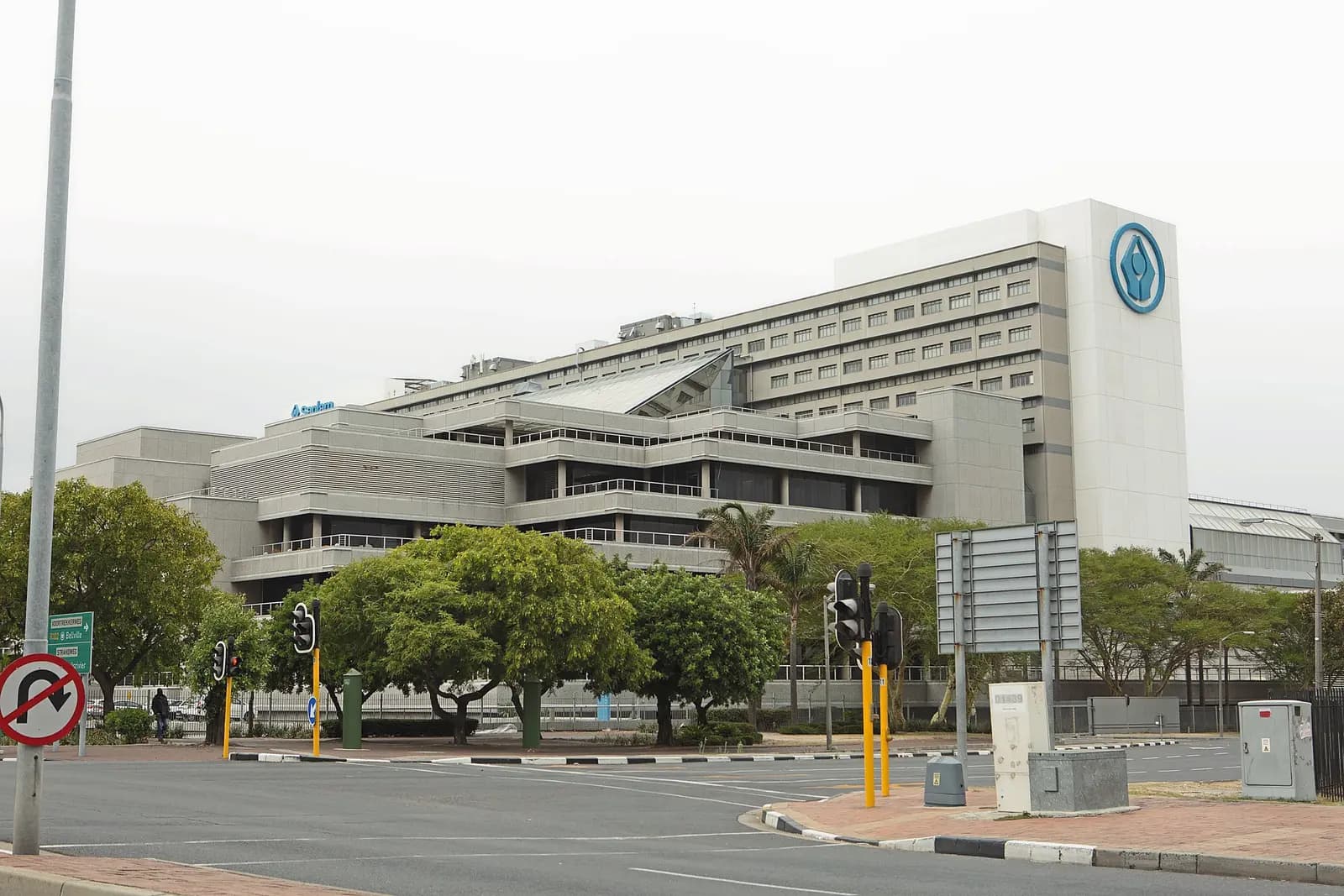
The circular moved a century-old relationship towards a vote
Sanlam and Santam distributed their joint scheme circular on 3 November 2026. [11]
The proposal offers eligible Santam shareholders R505 in cash for each scheme share. [11]
The announced aggregate consideration is about R21.2 billion. [11]
Santam shareholders are due to consider the scheme on 2 December 2026. [11]
Santam came first in 1918
A founding group prepared the insurance venture at a Cape Town meeting in December 1917. [1]
Santam was registered on 28 March 1918 and began official business on 1 May. [1]
Its planned work included trust services, fire and accident insurance, and life assurance. [1]
Willie Hofmeyr became the first chair. [1]
Sanlam separated the life fund
The founders decided that life assurance needed a separate company. [1]
The separation protected long-term policyholder funds from short-term insurance creditors. [1]
Sanlam was registered on 8 June 1918 as the life-assurance company. [1]
The two businesses therefore share an origin but developed as separate legal entities. [1][14]
Willie Hofmeyr supplied long-term leadership
Hofmeyr chaired Sanlam from 1918 until his death in 1953. [2]
He also acted as managing director from 1918 to 1920. [2]
His leadership linked the insurer to a wider project of Afrikaner economic organisation. [1][2]
That origin focused on poor white Afrikaners and formed within the racial politics of its period. [1][3]
The company later broadened its markets
Sanlam’s own history describes a move from the original life office into a diversified financial-services group. [3][5]
Its record also includes a 1993 sale of Metropolitan Life to a black-controlled company. [4]
The transaction helped form New Africa Investments, which listed on the JSE. [4]
These later steps did not erase the company’s narrower 1918 origin. [1][4]
Demutualisation created today’s listed structure
Sanlam demutualised in 1998. [3][5]
The conversion changed the life insurer from a mutual into a shareholder-owned company. [3][5]
Sanlam Limited became the listed parent, while Sanlam Life remained the principal life-insurance company. [5]
The shares listed in Johannesburg and Namibia on 30 November 1998. [3]
Ubuntu-Botho became a long-term shareholder
Sanlam entered an empowerment transaction with Ubuntu-Botho Investments in 2004. [4][10]
African Rainbow Capital describes Ubuntu-Botho as a broad-based, Black-controlled investment entity. [10]
Patrice Motsepe led the investment group and remains central to its corporate history. [10]
Sanlam and Ubuntu-Botho extended their strategic relationship to 2034. [5]
Shareholding, votes and management answer different questions
Sanlam’s audited table reported the Public Investment Corporation at 15.17% on 31 December 2025. [5]
The same table reported Ubuntu-Botho Investments at 13.81%. [5]
African Rainbow Capital’s current origin page describes a 13.1% economic interest and an 18.1% voting interest, but it does not state the measurement date. [10]
Paul Hanratty manages the group under board authority. A shareholding or voting interest does not itself assign daily executive management. [7][6]
Paul Hanratty leads the listed group
Hanratty became Sanlam group chief executive on 1 July 2020. [6][9]
The board extended his term to 31 December 2027. [8]
He began his insurance career in 1984 and previously held senior Old Mutual roles. [9][15]
Sanlam’s 2026 interim report continued to identify him as group chief executive. [6]
Sanlam already controls Santam, but the percentage needs care
The original firm-intention announcement described an effective Santam interest of 62.7%, excluding treasury shares. [12]
A correction said this figure included shares managed for third parties without a Sanlam beneficial interest. [13]
The corrected beneficial holding was 68,023,017 shares, or 61.9% excluding treasury shares, on 18 September 2026. [13][11]
Sanlam was therefore the majority shareholder before the proposed scheme. [11]
The scheme is not complete
The proposal would make Santam a wholly owned Sanlam subsidiary and end its public listings if all conditions are met. [11]
The transaction still requires the approvals and other conditions described in the circular. [11]
Support undertakings and indications covered about 48.3% of the scheme shares when the circular was posted. [11]
That support does not establish final shareholder approval or implementation. [11]
A shared origin did not make the companies identical
Santam began as the broader insurance and trust-services venture. Sanlam took responsibility for the long-term life-assurance fund. [1]
The companies shared organisers, offices and early leadership, but they had separate legal identities. [1]
That separation matters because policyholder obligations differ between life assurance and short-term insurance. [1]
It also explains why Sanlam can control Santam today without the companies becoming the same legal entity. [5][14]
Demutualisation changed who owned Sanlam
A mutual insurer has policyholder members rather than ordinary public shareholders. [3]
The 1998 conversion created shares in Sanlam Limited and placed those shares on public exchanges. [3][5]
Sanlam Life continued the regulated insurance operations inside the new listed group. [5]
The change separated the listed parent, the life company and the policy contracts into distinct parts of the structure. [5]
Santam retained minority investors and its own listing
Sanlam’s majority stake gave it corporate control before the 2026 proposal. [13][11]
Minority investors still owned the remaining Santam shares and could trade them on the public market. [14][11]
Santam therefore remained a listed company with its own board, reporting duties and shareholder meetings. [14]
The proposed scheme would remove that public minority only after its conditions are met. [11]
The offer price is not the same as the total cost
R505 is the proposed cash amount for each eligible scheme share. [11]
The R21.2 billion figure estimates the aggregate consideration for all eligible shares covered by the scheme. [11]
Neither figure values the Sanlam group or every share already held in Santam. [11][5]
The circular also distinguishes beneficial ownership from shares managed for third parties. [13][11]
The 2026 proposal has a defined decision path
The circular sets the meeting date, voting process and conditions for the proposed scheme. [11]
Eligible Santam shareholders must decide whether to support the transaction at the scheme meeting. [11]
Court, regulatory and other conditions can still affect implementation after a shareholder vote. [11]
Santam remains listed and the offer remains conditional while that process continues. [11]
Dated records prevent ownership figures from becoming permanent claims
Sanlam’s shareholder percentages come from audited statements dated 31 December 2025. [5]
The corrected Santam beneficial holding uses a separate measurement date of 18 September 2026. [13]
Ubuntu-Botho’s published economic and voting interests lack a stated measurement date on the cited page. [10]
These figures answer different questions and should not be combined into one current personal-wealth claim. [5][10][13]
The legal entities remain important
Sanlam Limited is the listed parent whose investors own the public security. [5]
Sanlam Life is the regulated operating company making the proposed offer. [5][11]
Santam remains a separately listed general insurer until the scheme becomes operative. [11][14]
Ubuntu-Botho is a Sanlam shareholder and strategic partner, not the manager of either insurer. [5][10]
Frequently asked questions
Did Sanlam found Santam? No. Santam was registered first. Sanlam then separated from its life-assurance operation in June 1918. [1]
Does Sanlam own Santam? Sanlam held a corrected 61.9% beneficial interest, excluding treasury shares, on 18 September 2026. [13]
Is the Santam buyout complete? No. The scheme still faced a shareholder vote and other conditions on 4 November 2026. [11]
Who leads Sanlam? Paul Hanratty was group chief executive at the September 2026 reporting date. [6]
Who built the early businesses? Willie Hofmeyr chaired both insurers and led Sanlam through its formative decades. [1][2]
What would happen to Santam’s listing? The listings would end only if the scheme becomes operative. [11]
Sources
- Grietjie Verhoef, The Power of Your Life: The Sanlam Century of Insurance Empowerment, 1918–2018 (Oxford University Press), 2018. Original source. Accessed 2026-11-04. ↩
- Grietjie Verhoef, Setting down the footprint: from war to war, 1919–1945 (Oxford University Press), 2018. Original source. Accessed 2026-11-04. ↩
- Sanlam Limited, Annual Report 2007: history and corporate citizenship, 2008. Original source. Accessed 2026-11-04. ↩
- Sanlam Limited, Integrated Report 2018, 2019-03-07. Original source. Accessed 2026-11-04. ↩
- Sanlam Limited, Annual Financial Statements for the year ended 31 December 2025, 2026-03-12. Original source. Accessed 2026-11-04. ↩
- Sanlam Limited, Interim results for the six months ended 30 June 2026, 2026-09-10. Original source. Accessed 2026-11-04. ↩
- Sanlam Limited, Notice of Annual General Meeting 2025, 2025-03-27. Original source. Accessed 2026-11-04. ↩
- Sanlam Limited, Chief executive officer succession, 2024-06-06. Original source. Accessed 2026-11-04. ↩
- Sanlam ESG Barometer, Paul Hanratty: Group Chief Executive Officer, Sanlam, 2025. Original source. Accessed 2026-11-04. ↩
- African Rainbow Capital, Our origins. Original source. Accessed 2026-11-04. ↩
- Sanlam Limited and Santam Limited, Posting of the joint scheme circular and notice of the general meeting, 2026-11-03. Original source. Accessed 2026-11-04. ↩
- Sanlam Limited and Santam Limited, Joint firm intention announcement regarding the proposed Santam scheme, 2026-10-06. Original source. Accessed 2026-11-04. ↩
- Sanlam Limited and Santam Limited, Correction to the joint firm intention announcement, 2026-10-14. Original source. Accessed 2026-11-04. ↩
- Santam Limited, Annual Financial Statements 2025, 2026-03-12. Original source. Accessed 2026-11-04. ↩
- Old Mutual plc, Directorate change: appointment of Paul Hanratty as chief operating officer, 2014-05-12. Original source. Accessed 2026-11-04. ↩