How Standard Bank Was Built: John Paterson, Standard Chartered and ICBC
How John Paterson’s Port Elizabeth banking plan became Standard Bank, separated from Standard Chartered and added ICBC as a strategic shareholder.
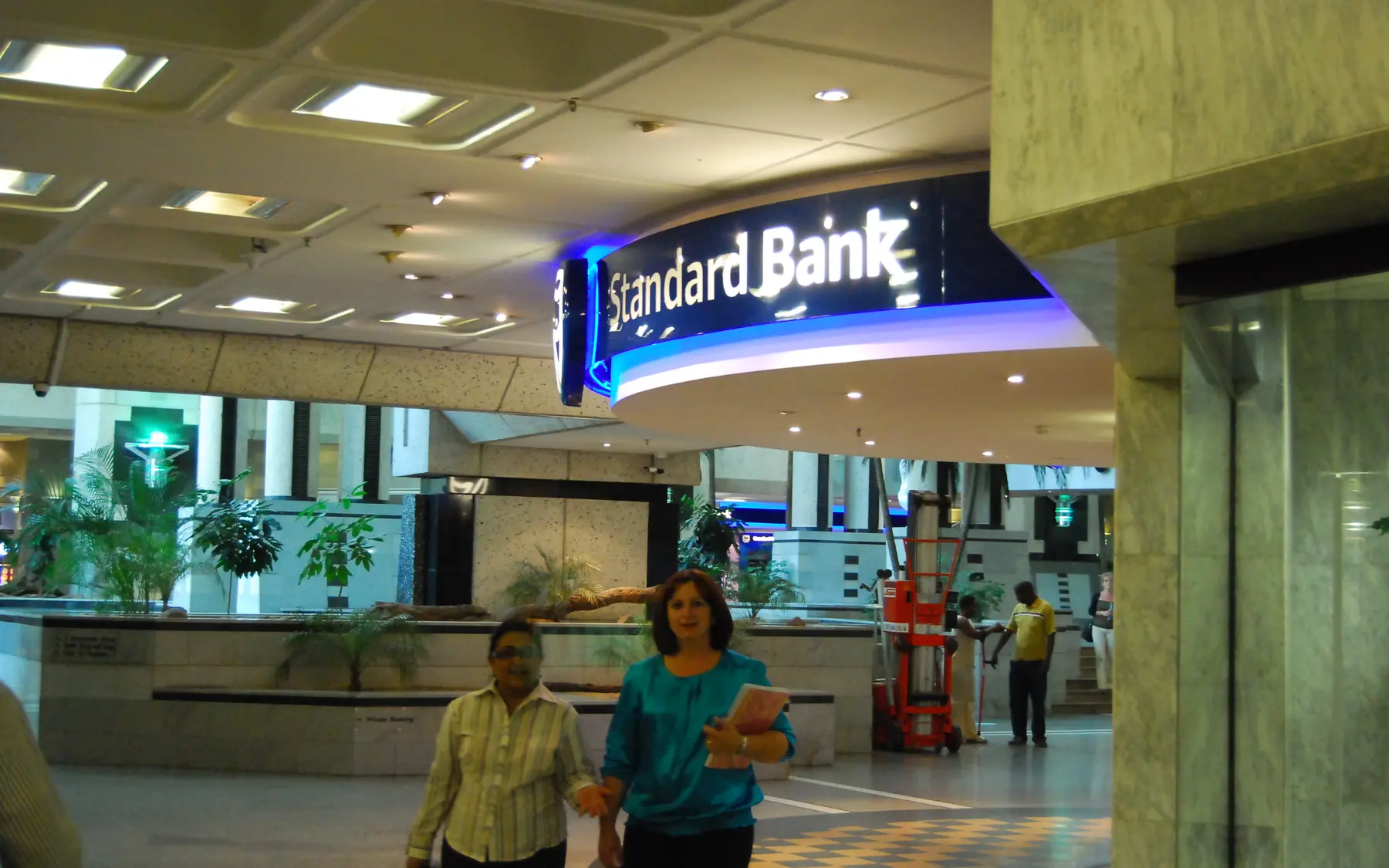
Standard Bank is a listed group with an operating bank
Standard Bank Group Limited is the listed parent company of a wider African financial-services group. [6][9]
The Standard Bank of South Africa Limited is the main South African operating bank below that parent. [6]
The parent trades under SBK in Johannesburg and SNB in Namibia. [9]
The operating bank does not represent a separate listed ordinary-share security. [6][9]
John Paterson proposed a Port Elizabeth bank in 1857
The corporate story began before the current group and bank companies existed. [2][5]
A committee led by John Paterson met in Port Elizabeth on 3 June 1857. [4]
The committee drafted a prospectus for a bank based in the growing port town. [4]
Its plan included buying smaller local banks and maintaining a London head office. [4]
Paterson took the funding plan to London
The first local proposal did not immediately produce the required capital. [2][4]
Paterson travelled to London in 1859 to seek support from British investors. [2][4]
Standard Bank later described him as the entrepreneur, politician and newspaperman behind the idea. [3]
His work connected Eastern Cape commercial demand with a larger international capital base. [2][3]
The bank was incorporated in 1862
The Standard Bank of British South Africa was incorporated in London on 15 October 1862. [4][1]
Its authorised capital was £1 million divided into 10,000 shares. [2]
The legal company was British, but its planned operating centre was in southern Africa. [2][4]
This structure separated the company’s place of incorporation from its commercial purpose. [2][4]
Operations started in Port Elizabeth in 1863
The bank began business through its Port Elizabeth operation in early 1863. [4][1]
It absorbed the Commercial Bank of Port Elizabeth as the new network took shape. [4]
Port Elizabeth remained the bank’s South African headquarters for 23 years. [2]
The operating network then expanded beyond the Eastern Cape. [1][2]
Mineral discoveries changed the bank’s geography
Standard Bank opened on the northern Cape diamond fields in 1870. [3][1]
It later opened the first bank branch on the Witwatersrand goldfields in October 1886. [1][3]
The Johannesburg branch initially operated from a tent in Ferreira’s Camp. [1][3]
Mining expansion moved the bank towards the economic centre that later became its headquarters. [1][3]
A South African subsidiary created a new legal layer
The international bank created a South African subsidiary in 1962. [2][5]
That subsidiary carried the Standard Bank name in South and South West Africa. [2]
The London company later adopted the Standard Bank Limited name. [2]
The change created separate corporate layers before the 1969 international merger. [2][5]
The 1969 merger created Standard Chartered
The historic Standard Bank merged with the Chartered Bank of India, Australia and China in 1969. [12]
The combined international business adopted the Standard Chartered name. [12]
The same year, Standard Bank Investment Corporation became the South African bank’s holding company. [2][5]
The two events explain why Standard Bank and Standard Chartered share part of one corporate ancestry. [12][5]
The South African holding company listed in 1970
Standard Bank Investment Corporation listed on the Johannesburg Stock Exchange in 1970. [2][5]
The listed holding company owned the South African operating bank. [5]
Its shareholders therefore owned the parent rather than direct listed shares in every banking subsidiary. [5]
This parent-and-subsidiary structure remains important for reading the current group. [6][9]
Liberty became part of the group through stages
Standard Bank Investment Corporation bought 25% of a Liberty control vehicle in 1978. [1][5]
The group increased its interest and later bought the Gordon family’s remaining control interest. [5][14]
Standard Bank completed its purchase of Liberty’s minority shareholders in March 2022. [1][14]
Liberty Holdings was a wholly owned group subsidiary at 30 June 2026. [6]
Standard Chartered sold its remaining South African stake
Standard Chartered retained a 39% interest in the South African holding company until 1987. [2][5]
It sold that interest and transferred full ownership to South African shareholders. [2][5]
The sale ended the historic parent relationship between the two modern groups. [5][13]
Standard Chartered later returned to South Africa as a separate international banking operation. [13]
The 1987 separation enabled a new African expansion
Standard Bank restored an outward African expansion strategy after the Standard Chartered separation. [1][5]
It acquired a 49% interest in Union Bank of Swaziland in 1988. [1]
The group then acquired ANZ Grindlays operations across several African markets in 1992. [1][5]
Those transactions created the base for the modern Stanbic network. [1][5]
The listed parent adopted its current name in 2002
Standard Bank Investment Corporation changed its name to Standard Bank Group Limited on 3 June 2002. [1][5]
The name change did not turn the operating bank into the listed security. [5][6]
Standard Bank Group remained the parent of The Standard Bank of South Africa. [6]
The SBK share code therefore belongs to the group parent. [9]
ICBC became a strategic shareholder in 2008
Standard Bank finalised a strategic partnership with Industrial and Commercial Bank of China in 2008. [1]
ICBC became a 20% shareholder when the partnership took effect. [1]
The relationship connected Standard Bank’s African network with ICBC’s China capabilities. [11][1]
The partners received approval for a joint African renminbi clearing operation in 2026. [11]
The main Standard Bank corporate relationships
The record separates the listed parent, operating bank, subsidiaries, former parent and strategic shareholder. [6][7][5]
| Entity | Role | Current relationship | Control point | Sources |
|---|---|---|---|---|
| Standard Bank Group | Listed parent | SBK on the JSE | Public shareholders elect the board | [9] [7] |
| Standard Bank South Africa | Operating bank | Wholly owned group subsidiary | Regulated subsidiary management | [6] |
| Liberty Holdings | Insurance holding company | Wholly owned group subsidiary | Group ownership since 2022 | [6] [1] |
| ICBC | Strategic shareholder | 19.7% beneficial holding | No disclosed sole control | [7] |
| Standard Chartered | Historic international parent | Separate since 1987 | No current parent relationship | [5] [13] |
Current ownership is dispersed among public shareholders
ICBC held a 19.7% beneficial interest in Standard Bank Group at 30 June 2026. [7]
The Government Employees Pension Fund held 14.3% on the same reporting date. [7]
Standard Bank identifies the Public Investment Corporation alongside that pension-fund holding. [7]
The remaining shares were distributed among other institutional and public investors. [7]
Beneficial ownership does not equal daily management
The shareholder table describes beneficial interests determined from the share register and company investigations. [7]
A 19.7% interest gives ICBC substantial economic and voting exposure. [7]
It does not establish that ICBC alone manages Standard Bank Group. [7][10]
Executive authority comes from board appointments and the group’s governance structure. [10]
Sim Tshabalala leads the group
Sim Tshabalala joined Standard Bank in its project-finance operation in 2000. [10]
He became chief executive of the South African bank in June 2008. [10]
Tshabalala served as joint group chief executive from March 2013. [10]
He became the sole group chief executive in September 2017. [10]
The current CEO role is separate from share ownership
Standard Bank still identified Tshabalala as group chief executive in its 2026 disclosures. [10][8]
His office gives him authority to lead daily group management under board oversight. [10]
The sources do not disclose a personal controlling shareholding for Tshabalala. [7][10]
Management control and beneficial ownership therefore remain different concepts. [7][10]
The group now operates across 21 African countries
Standard Bank reported operations in 21 African countries during the 2026 interim period. [9]
The group served more than 19.5 million active clients. [9]
It reported total assets of R3.8 trillion at 30 June 2026. [9]
These figures describe the combined group rather than only the South African bank. [9][6]
The 2026 interim results provide the current scale
Standard Bank reported R26.1 billion of headline earnings for the first half of 2026. [8][9]
Return on equity reached 19.8% for that six-month period. [8]
The group’s market capitalisation was R532 billion at 30 June 2026. [9]
These interim figures are dated measurements and not permanent company attributes. [8][9]
The founder story and the legal history are not identical
John Paterson led the commercial proposal that produced the 1862 bank. [3][4]
The current listed parent was created as a South African holding company in 1969. [2][5]
The operating bank traces its legal layer to the South African company formed in 1962. [2][5]
Each date answers a different question about origin, incorporation and current structure. [2][5]
Standard Chartered remains part of the ancestry, not the ownership
Standard Chartered inherited the historic international Standard Bank through the 1969 merger. [12]
The modern South African group separated when Standard Chartered sold its final interest in 1987. [5][13]
The two groups now operate as separate companies with separate shareholders and management. [5][13]
A shared name history does not create a current parent relationship. [5][12]
What the Standard Bank history shows
Paterson converted a Port Elizabeth banking proposal into a company financed through London. [2][4]
Later restructurings separated the international parent from the South African listed group. [2][5]
African acquisitions then changed a domestic bank into a wider continental network. [1][5]
ICBC added a strategic shareholder relationship without replacing Standard Bank’s management structure. [7][10]
Frequently asked questions
Who founded Standard Bank? John Paterson led the plan and fundraising that produced the bank incorporated in 1862. [2][3]
Is Standard Bank owned by Standard Chartered? No. Standard Chartered sold its remaining South African interest in 1987. [5][13]
Does ICBC own Standard Bank? ICBC held 19.7% beneficially at 30 June 2026, but it did not hold sole control. [7]
Who runs Standard Bank? Sim Tshabalala was group chief executive at the 2026 reporting date. [10][8]
Is Standard Bank South Africa listed? No. The listed security belongs to Standard Bank Group Limited. [6][9]
Does Standard Bank own Liberty? Liberty Holdings was a wholly owned group subsidiary at 30 June 2026. [6]
Sources
- Standard Bank Group, Our journey. Original source. Accessed 2026-10-31. ↩
- Standard Bank Group, Annual integrated report 2010: our history, 2011. Original source. Accessed 2026-10-31. ↩
- Standard Bank Group, Annual integrated report 2012: 150 years of company history, 2013-05-14. Original source. Accessed 2026-10-31. ↩
- AIM25 / London Metropolitan Archives, Standard Bank of South Africa operations archive description. Original source. Accessed 2026-10-31. ↩
- Standard Bank Group, Preference share pre-listing statement: incorporation and corporate history, 2004-06-14. Original source. Accessed 2026-10-31. ↩
- Standard Bank Group, Organisational structure at 30 June 2026. Original source. Accessed 2026-10-31. ↩
- Standard Bank Group, Shareholder information at 30 June 2026. Original source. Accessed 2026-10-31. ↩
- Standard Bank Group, 2026 interim results highlights, 2026-08-13. Original source. Accessed 2026-10-31. ↩
- Standard Bank Group, Financial highlights at 30 June 2026. Original source. Accessed 2026-10-31. ↩
- Standard Bank Group, Sim Tshabalala leadership profile. Original source. Accessed 2026-10-31. ↩
- Standard Bank Group, Standard Bank and ICBC authorised to clear renminbi in Africa. Original source. Accessed 2026-10-31. ↩
- Standard Chartered, Our history. Original source. Accessed 2026-10-31. ↩
- Standard Chartered, Standard Chartered in South Africa. Original source. Accessed 2026-10-31. ↩
- Liberty Holdings, About us. Original source. Accessed 2026-10-31. ↩