How Takealot Was Built: Take2, Kalahari and Naspers Control
Explore Takealot’s Take2 origins, the Kalahari merger and Naspers investment. Separate the founder, funding, equity ownership and voting rights in its history.
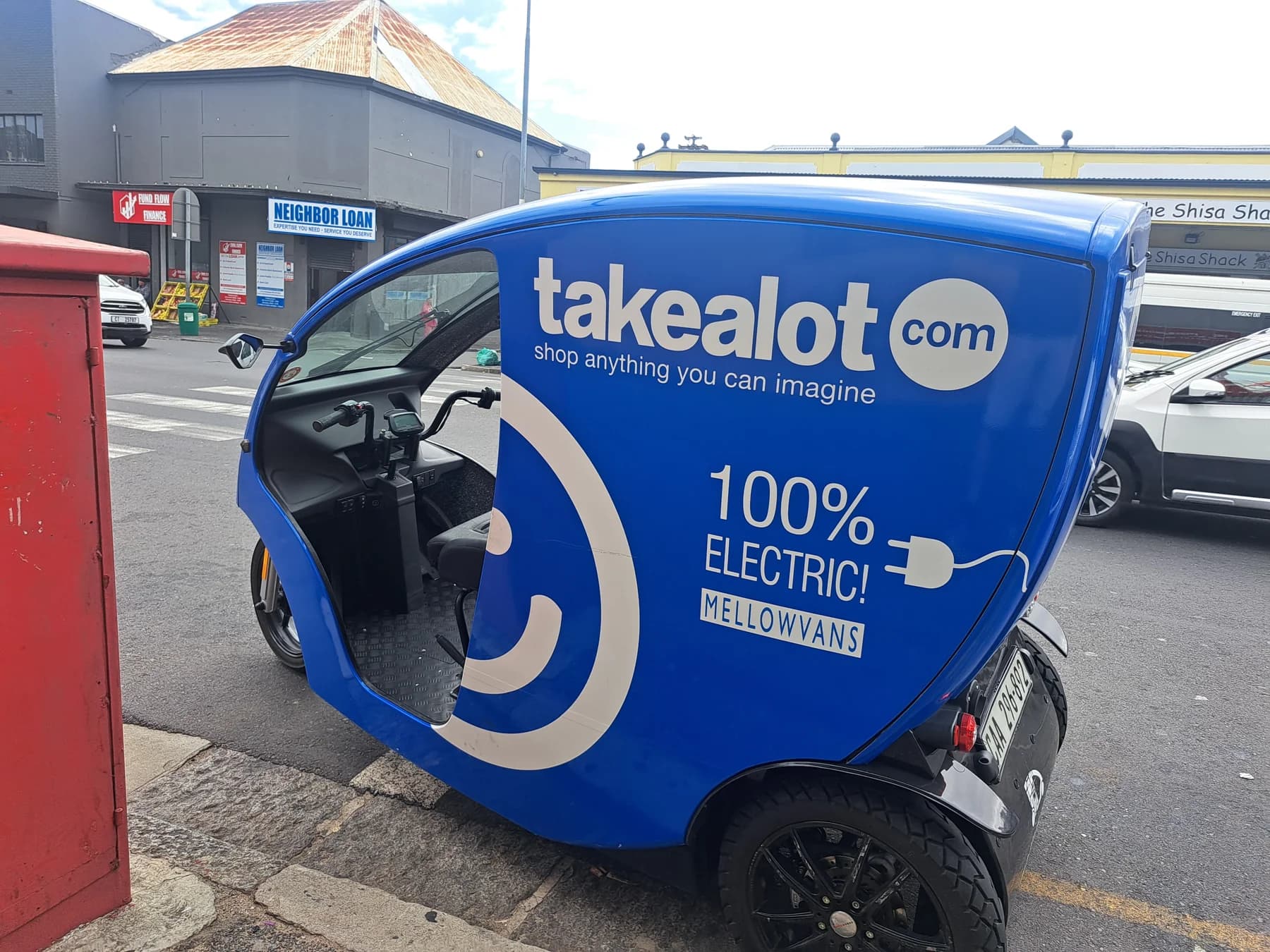
A new identity built on an acquired business
Takealot’s history starts before the Takealot name. In 2010, Kim Reid and Tiger Global Management acquired the existing Take2 e-commerce business. The group’s timeline records Takealot.com’s formal launch in 2011. [1]
The distinction is useful. The acquisition supplied an operating starting point, while the launch established a new retail identity. Calling Reid Takealot’s founder does not make him the original founder of Take2. [1][6]
Naspers’s Digital Horizon report places Take2 within the development of South African online platforms during the 2000s. It places Kalahari in the earlier wave of online retail. Takealot therefore entered an industry with established businesses, rather than inventing online shopping locally. [10]
The later group combined entrepreneurship, external capital and acquired operations. Its development is more informative than a simple story about a website changing its name. The Kalahari transaction and subsequent ownership changes each added a separate chapter. [1][4]
Tiger Global supplied capital, not the retail founder’s identity
Tiger Global identifies itself as a New York investment firm established in 2001. It began with public-equity investing and expanded into private investments in 2003. Its involvement in Takealot fits that broader investment role. [9][1]
Takealot’s timeline records a further US$100 million investment from Tiger Global in 2014. It also dates the launch of Takealot Marketplace to that year. The marketplace opened a route for other businesses to sell through the platform. [1]
The funding milestone and the marketplace milestone describe different parts of the company’s development. One concerns capital. The other concerns its commercial model. Neither establishes that the investor alone built the retail operation. [1]
Takealot’s 2021 founder announcement credits Reid and his team with the first decade’s operating growth. It describes a business that developed from a warehouse in Montague Gardens, Cape Town. That operating history complements, rather than replaces, the investment history. [6]
Kalahari was a merger partner, not the original Takealot name
The Competition Commission announced conditional approval of the Takealot–Kalahari merger on 6 January 2015. It described both businesses as online retailers of consumer goods. Takealot’s own timeline records their merger in 2015. [2][1]
The Commission described two connected steps. Takealot would acquire Kalahari, while Tiger Global would reduce its shareholding in favour of the seller. The proposed arrangement would give the two principal investors equal shareholdings in the merged business. [2]
That does not mean each investor would own half of every issued share. The later 2017 record shows two principal holdings of 47.08% each, alongside minority shareholders. Equal principal holdings and complete ownership are different propositions. [2][3]
The approval also addressed employment. The Commission capped merger-related retrenchments at 200 employees and required a training or reskilling fund for affected workers. This was a limit and support requirement, not evidence that 200 people actually lost their jobs. [2]
Kalahari’s role was therefore more than an old brand appearing in a timeline. It brought an existing competing operation into the combination. The transaction also changed the shareholder relationship around the continuing Takealot business. [2][1]
The 2017 investment separated equity from voting rights
The next control transaction involved MIH Ecommerce Holdings, a Naspers subsidiary. The Competition Tribunal approved it unconditionally on 2 August 2017. Its reasons, issued on 25 August, explain the proposed rights in detail. [3]
Before the transaction, the Naspers subsidiary and a Tiger Global investment vehicle each held 47.08% of Takealot. Minority shareholders held the remaining 5.84%. The proposed investment would increase the Naspers subsidiary’s stake to 58.26%. [3]
The new A-class shares would not automatically provide extra voting rights. However, the subsidiary could elect to convert them into voting shares proportional to its holding. It could also exercise a veto over Takealot’s business plan. [3]
This is why the equity percentage cannot simply be repeated as the voting percentage. The decision describes economic ownership, a conversion right and a business-plan veto. Those mechanisms require explanation before drawing a conclusion about control. [3]
The parties said Takealot needed funding to grow and reach profitability. The investment was a subscription for new shares, rather than only a purchase from an exiting owner. That distinction identifies whether capital enters the business or pays an existing shareholder. [3]
| Source and date | What it records | What the figure does not establish | Sources |
|---|---|---|---|
| Tribunal, August 2017 | Proposed increase for the Naspers subsidiary from 47.08% to 58.26%. | No automatic matching increase in voting rights. | [3] |
| Naspers FY2018 report | 96% effective interest after December 2017, or 91% fully diluted. | The two percentages use different share-count assumptions. | [4] |
| Naspers FY2026 report | Group chart shows a wholly owned chain to Takealot. | The chart is not a personal shareholding disclosure for the founder. | [5] |
Two investments produced the FY2018 ownership position
Naspers’s 2018 annual report records a US$74 million investment in August 2017. It describes acquiring control and a resulting 58% effective interest. This rounded reporting figure complements the more precise 58.26% in the Tribunal’s transaction description. [4][3]
The report then records an additional 38% interest acquired from minority shareholders in December 2017. Settlement used Naspers shares bought in the market. Those shares had a fair value of US$128 million at settlement. [4]
The two amounts describe different transactions. The August investment funded Takealot, while December’s purchase acquired existing shareholders’ interests. Neither amount is presented here as the original cost of creating Takealot. [4]
After the December transaction, Naspers reported a 96% effective interest and a 91% fully diluted interest. The fully diluted measure allows for potential additional shares. It should not be silently substituted for the effective-interest figure, or treated as a separate voting percentage. [4]
The report covers the year ended 31 March 2018. Its ownership percentages belong to that historical reporting period. They do not establish the exact percentage held in October 2026. [4]
The later structure and the founder’s executive transition
Naspers’s FY2026 report shows a wholly owned chain from Naspers through its e-commerce holding company to Takealot. The chart presents that chain separately from its investment in Prosus. It is more precise than describing Takealot’s parent simply as “Naspers/Prosus”. [5]
Founder, shareholder and chief executive are also separate roles. In February 2021, Takealot announced Reid’s planned transition towards the chairmanship. An August announcement identified him as chairman and announced a new group chief executive effective from October. [6][7]
The current executive page, checked on 18 October 2026, identifies separate group and Takealot.com chief executive positions. This article does not present Reid as the current chief executive. Nor does it turn the group’s corporate holdings into his personal shareholding. [8]
The resulting history has several stages: an acquired predecessor, a new launch, a rival’s merger and later controlling investment. Recognising those stages gives each contributor an accurate role. It also keeps the business’s operating history separate from its changing ownership. [1][3][4]
Frequently asked questions
Was Takealot originally Kalahari? No. Takealot developed from the acquired Take2 business and launched in 2011. Kalahari was a separate online retailer that merged with it in 2015. [1][2]
Did Naspers create Takealot in 2011? The group’s history credits Reid and Tiger Global with the Take2 acquisition. Naspers’s later investment and control transactions belong to subsequent chapters. [1][4]
Did the 2017 stake give identical voting power automatically? No. The Tribunal expressly distinguished the A-class shares from additional voting rights. Its decision described conversion and veto mechanisms instead. [3]
Is 96% the current ownership figure? It is the effective-interest figure in the FY2018 report, alongside 91% fully diluted. The FY2026 structure chart instead shows a wholly owned chain to Takealot. [4][5]
Does the photograph show the merger? No. It shows a Takealot-branded delivery vehicle. The source dates it to 25 March 2026 according to EXIF data, rather than the 2015 transaction. [11]
Sources
- Takealot Group, Our Journey: Take2 acquisition, launch, investment and Kalahari merger. Original source. Accessed 2026-10-18. ↩
- Competition Commission South Africa, Statement on merger decisions, 6 January 2015: Takealot and Kalahari, page 1, 2015-01-06. Original source. Accessed 2026-10-18. ↩
- Competition Tribunal South Africa, LM038May17: MIH Ecommerce Holdings and Takealot, reasons paragraphs 3–16, 2017-08-25. Original source. Accessed 2026-10-18. ↩
- Naspers, Integrated Annual Report 2018: etail page 39 and acquisition disclosures page 105. Original source. Accessed 2026-10-18. ↩
- Naspers, Integrated Annual Report 2026: group structure, printed page 39. Original source. Accessed 2026-10-18. ↩
- Takealot Group, Kim Reid to become Takealot Group Chairman, 2021-02-26. Original source. Accessed 2026-10-18. ↩
- Takealot Group, Announcement of Takealot Group CEO: Reid identified as chairman, 2021-08-10. Original source. Accessed 2026-10-18. ↩
- Takealot Group, Our People: current executive leadership. Original source. Accessed 2026-10-18. ↩
- Tiger Global Management, Our Story: establishment, New York headquarters and public/private investing. Original source. Accessed 2026-10-18. ↩
- Naspers, Our Digital Horizon: The Economic Opportunity of Digital Platforms in South Africa 2024, page 46. Original source. Accessed 2026-10-18. ↩
- Axxter99, Takealot delivery: photograph dated 25 March 2026 according to EXIF, CC BY-SA 4.0. Original source. Accessed 2026-10-18. ↩