Amabutho: Zulu Regiments, History and Their Role Today
What amabutho means, the history of Zulu age regiments, royal ceremonies today, and why amabutho should be distinguished from March & March.
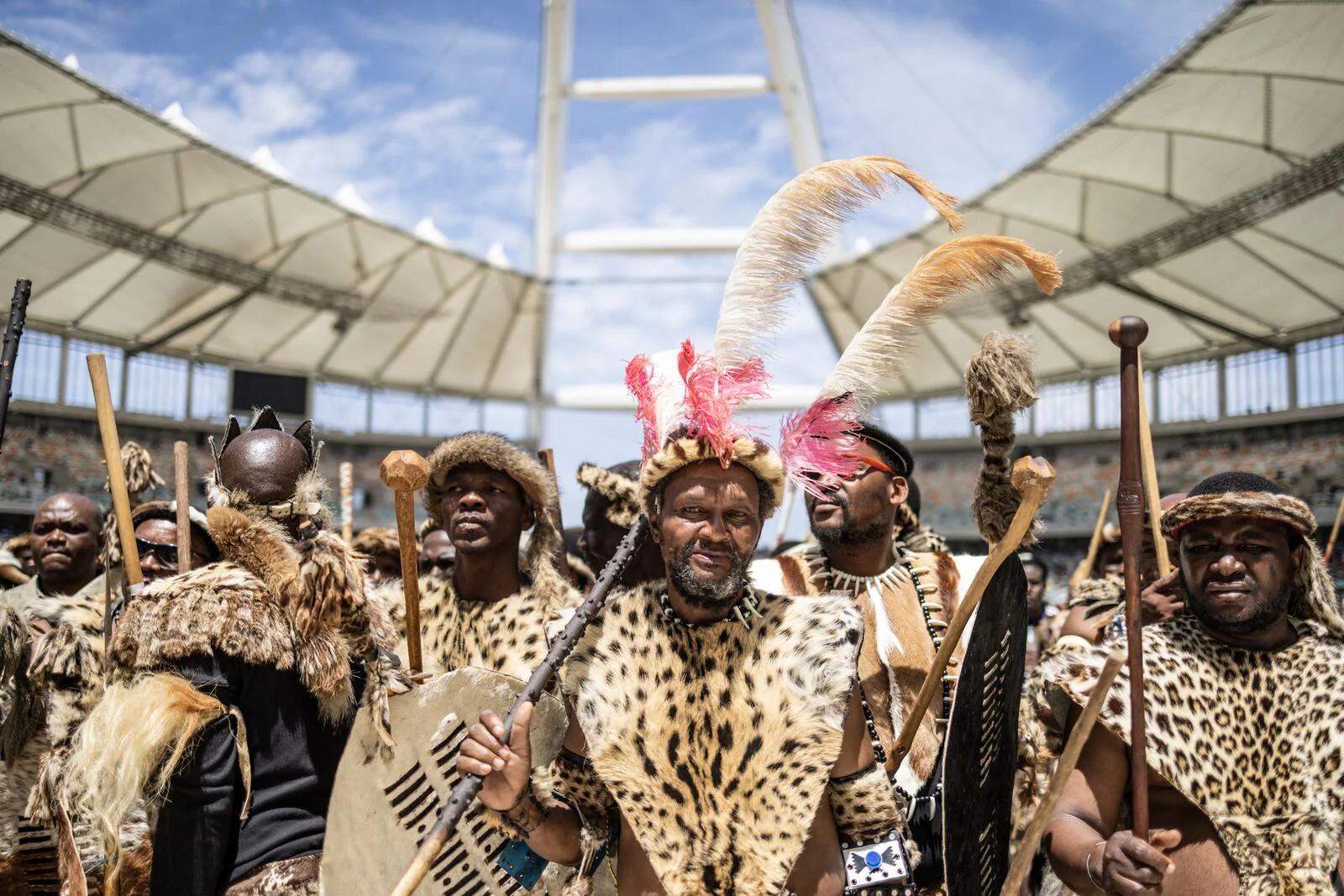
What does amabutho mean?
Amabutho refers to regiments or organised groups within the Zulu age-regiment tradition. Ibutho is the singular form. The institution combines a military history with social and ceremonial responsibilities. It is broader than any one leader or contemporary protest campaign. [1][2]
Origins before Shaka
Ditsong Museums describes age-group organisation before Shaka’s reign. Young people of similar ages entered organised groups, with responsibilities linked to their communities and rulers. Shaka developed this existing institution rather than creating age organisation from nothing. [1]
Regiments in the Zulu kingdom
Under Shaka, young men from different chiefdoms entered age regiments under royal authority. South African History Online describes their incorporation into the kingdom’s organised service. The system connected men from different local communities to a wider political and military structure. [2]
The Department of Basic Education’s history curriculum describes regiments living in military settlements called amakhanda. These arrangements helped organise service and strengthen central authority. Regiments were therefore part of the state’s structure, rather than simply a collection of warriors assembled for a single battle. [3]
Social organisation as well as military service
South African History Online describes royal settlements with ceremonial and social functions alongside military service. Royal authority also controlled when regiments could marry. The system shaped relationships between individuals, communities and the kingdom. [2]
Amabutho at royal ceremonies today
Regiments attended the recognition-certificate event in Durban on 29 October 2022. The President addressed amabutho in his speech. The occasion illustrates their continuing relationship with Zulu kingship. [4]
The ceremonial role extends beyond a coronation. Recent reporting on King Misuzulu’s Heritage Day appearance in Umlazi places regiments within present-day royal events. A description of amabutho based only on protest footage would omit that wider cultural setting. [5]
Amabutho, amakhosi and named leaders
Amakhosi are traditional leaders. Amabutho are regiments or their members in the relevant context. A named regiment and its leader should be identified when the evidence allows. Daily Sun, for example, connects Phakelumthakathi Ndabandaba with KwaMandlakazi in Nongoma. That does not establish that he represents every regiment. [6]
Are amabutho the same as March & March?
No. March & March is a contemporary movement led by Jacinta Ngobese-Zuma. Amabutho are a much older institution. Participation in the same campaign does not make the groups identical. [7][1]
EWN documented Ndabandaba’s support for March & March in June 2026. His participation does not establish membership or support by all amabutho. [8]
The September 2026 Ingonyama Trust indaba
SAI recorded amabutho entering and interrupting the investment indaba at Durban’s ICC on 30 September 2026. Its report identifies Ngizwe Mchunu and Phakelumthakathi among those involved and includes photographs, video and an event timeline. [9]
East Coast Radio recorded Ndabandaba’s explanation that the action concerned communal land and investment. His stated motive is distinct from evidence about what happened inside the venue. Claims that a group acted for the King also require evidence of authorisation, rather than an assumption based on dress or association. [10]
How to read accounts of the institution
Accounts of amabutho can concern a named regiment, a royal ceremony or a specific protest. Those contexts show different aspects of the institution. [9]
Sources
- Ditsong Museums of South Africa, Amabutho akwaZulu: royal patronage since the pre-Shakan era, 2023-02-21. Original source. Accessed 2026-10-02. ↩
- South African History Online, Shaka Zulu. Original source. Accessed 2026-10-02. ↩
- Department of Basic Education, History Grades 10–12: amended curriculum statement. Original source. Accessed 2026-10-02. ↩
- The Presidency, Address at the handover of the Certificate of Recognition to King Misuzulu, 2022-10-29. Original source. Accessed 2026-10-02. ↩
- TimesLIVE, King Misuzulu celebrates Heritage Day in Umlazi, 2026-09-25. Original source. Accessed 2026-10-02. ↩
- Daily Sun, Amabutho leader now a TV star!, 2024-06-03. Original source. Accessed 2026-10-02. ↩
- Eyewitness News, March and March will protest every Thursday, says Ngobese-Zuma, 2026-07-01. Original source. Accessed 2026-10-02. ↩
- Eyewitness News, Phakelumthakathi distances himself from violence during anti-illegal immigration protests, 2026-07-01. Original source. Accessed 2026-10-02. ↩
- South African Index, Zulu regiments disrupt the Ingonyama Trust indaba: SAI reporting and visual record, 2026-09-30. Original source. Accessed 2026-10-02. ↩
- East Coast Radio, Zulu regiments storm Ingonyama Trust meeting, 2026-09-30. Original source. Accessed 2026-10-02. ↩